


I don’t think I’ve ever had a Thanksgiving dinner in Paris that was the same from year to year. One year a friend hired a chef and dinner was served all plated up, in the kitchen. Another year I volunteered to make Thanksgiving dinner and ended up cutting the turkey into small pieces and braising it. Since I was cooking for twenty+ people, that was the only way a turkey would fit in my French oven, which at the time was so small that I could barely squeeze a chicken into it.
Another year I was staying with friends in Provence and we were shocked when the bird that we pre-ordered from the local butcher came already stuffed, by the butcher. I was tempted to scoop his out and cook the bird with the stuffing mix we’d already prepared, but he’d done such a beautiful job of sewing it up with butcher’s twine that we cooked the turkey as is, and it was incredible.
Thanksgiving is a holiday that’s traditional, of course, for Americans (Canadians have their own Thanksgiving), but French people don’t really “get” it. And to make the meal, you have to go on a scavenger hunt, tracking down all the fixings, like cranberries (nope, the airelles at Picard aren’t the same thing…let’s not pretend that they are), sweet potatoes (hold the marshmallows, at least for European guests), Pepperidge Farm stuffing mix, and whole turkeys, which you often have to pre-order, and if you live in an upscale neighborhood, they can cost a small fortune.
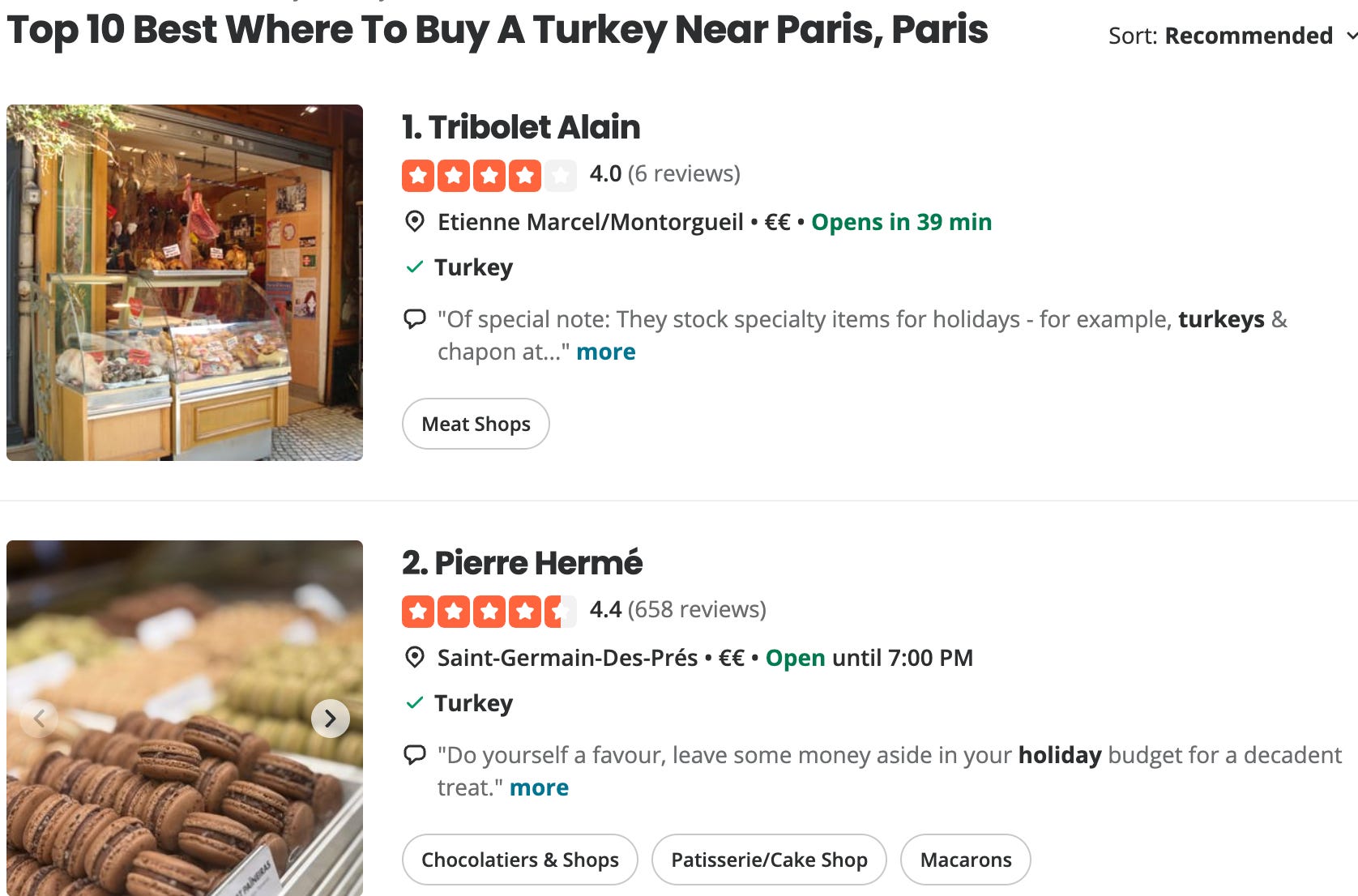
It’s a holiday about gathering around the table with familiar foods and turkey is not high on most French people’s list of things they prefer to eat. That said, the dinde fermière, heritage free-range turkeys, in France are delicious. But once Romain discovered stuffing (la farce), he was hooked.
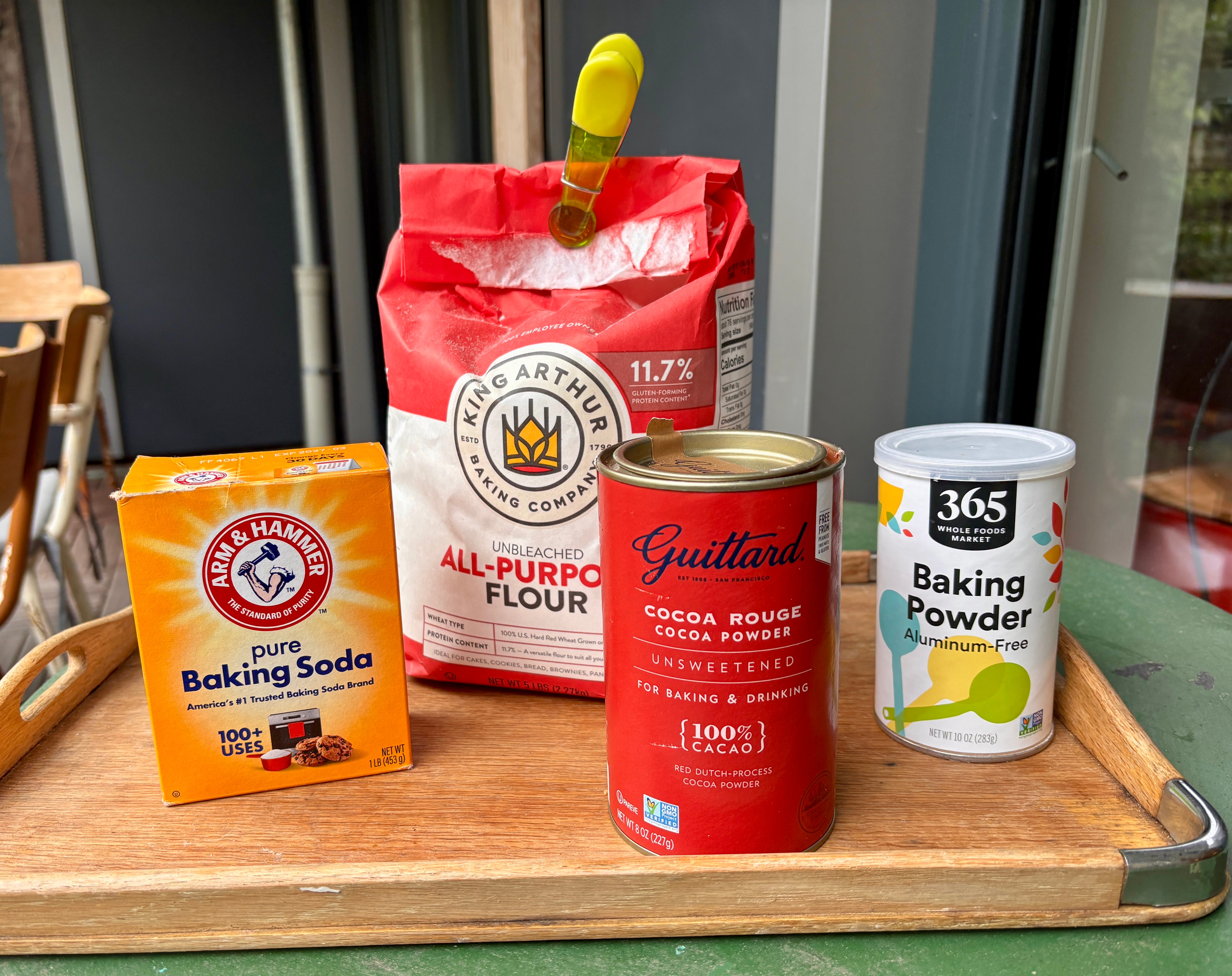
This year I was invited to a dinner and was tasked with making an American dessert by my French-American hosts. Since the theme was américain, I decided I should use American ingredients and dug into my stash of King Arthur flour, Guittard cocoa powder, aluminum-free Whole Foods baking powder, and Arm & Hammer baking soda to make my dessert.
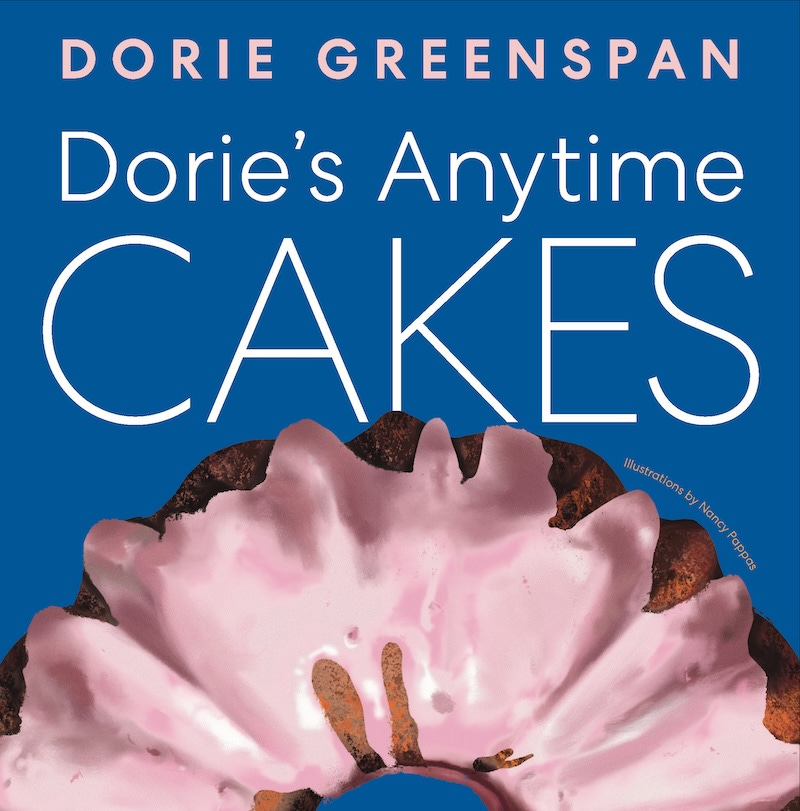
At the top of the stack of books that came out this fall is Dorie Greenspan’s new one, Dorie’s Anytime Cakes. I had bookmarked her recipe for portokalopita, a Greek orange cake that I fell in love with in Tinos, but a cake made with filo dough didn’t seem like a T-Day dessert. So I’m saving that for when someone invites me over for a Greek dinner. Hint hint…
I have a few devil’s food cakes in my repertoire but was intrigued by Dorie’s because it’s baked in a bundt pan, which is also très américain (although there are kugelhopf pans in France). I have a few bundt pans I brought back from the States and decided to use the one with the deep and intricate design.
Devil’s food cake is historically made with natural cocoa powder, which hasn’t been Dutch-processed with an alkaline ingredient, so is generally used along with baking soda as a leavening agent. The reaction of the two can give the cake a reddish hue,* hence the name of the cake. Dorie recommends using Dutch-process cocoa powder in her recipe, so I stuck with that. To stay in the rouge vein, I used Guittard cocoa rouge cocoa powder, which has a reddish hue, but feel free to use your favorite cocoa powder here, Dutch-process or natural.
While Romain watched me gather the ingredients for making the cake, he wondered why I was putting the dry ingredients in a sieve. I told him it was to disperse them, especially the lumpy cocoa powder.

When I lived in San Francisco, I was a member of the Bakers Dozen group, an informal association of bakers and people who like to bake at home.
At one of our get-togethers (which were heaven, being in the company of a hundred other bakers who loved to talk about things like sifting for an hour), the late baker Marion Cunningham, who was never shy about offering her opinion, chimed in with: “Well, do you have to sift is like asking: ‘Do you have to wear shoes?’”
Which is a good question.
A few years ago I ran into an acquaintance at a local bakery. When we took out our phones to exchange contact info, I looked down and noticed that he wasn’t wearing shoes. Kinda perplexed, I asked him about it and he said that he stopped wearing shoes a few years ago. I wondered aloud if he was concerned about all the grit and glass, not to mention the 💩 on the sidewalks, and he said it didn’t bother him.
And as for shoes, I’m going to continue wearing mine in Paris. And here, I did sift.
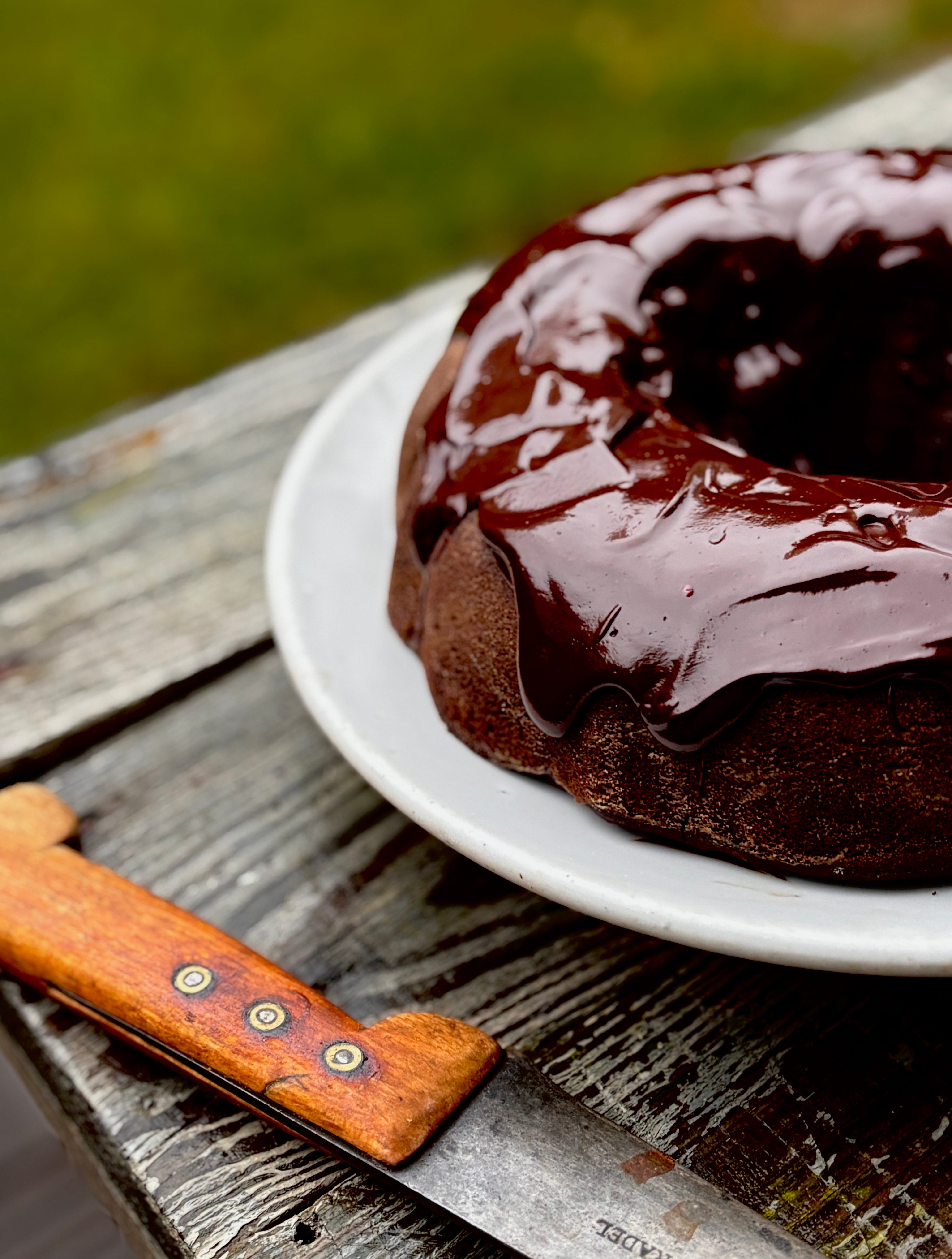
I baked the cake in my stylish bundt pan, which, woe was me, didn’t want to let go of the cake. (I can’t say I blame it…) That’s the trouble with some of the more intricate bundt pans; they look cool but don’t work for every cake.
So I remade the cake in a less-complicated bundt pan and it released just fine. I happened to be texting my friend George that day, who was one of the food stylists for my book Ready for Dessert, and he told me that he uses Bak-Klene on intricate bundt pans and nothing ever sticks. He graciously had left me a can of it, but I forgot about it in my cupboard. Next time.
(Some bakers make a baker’s goo, mixing together flour, vegetable shortening, and vegetable oil, and use that to grease cake pans. I haven’t tried it but apparently it’s a game-changer.)
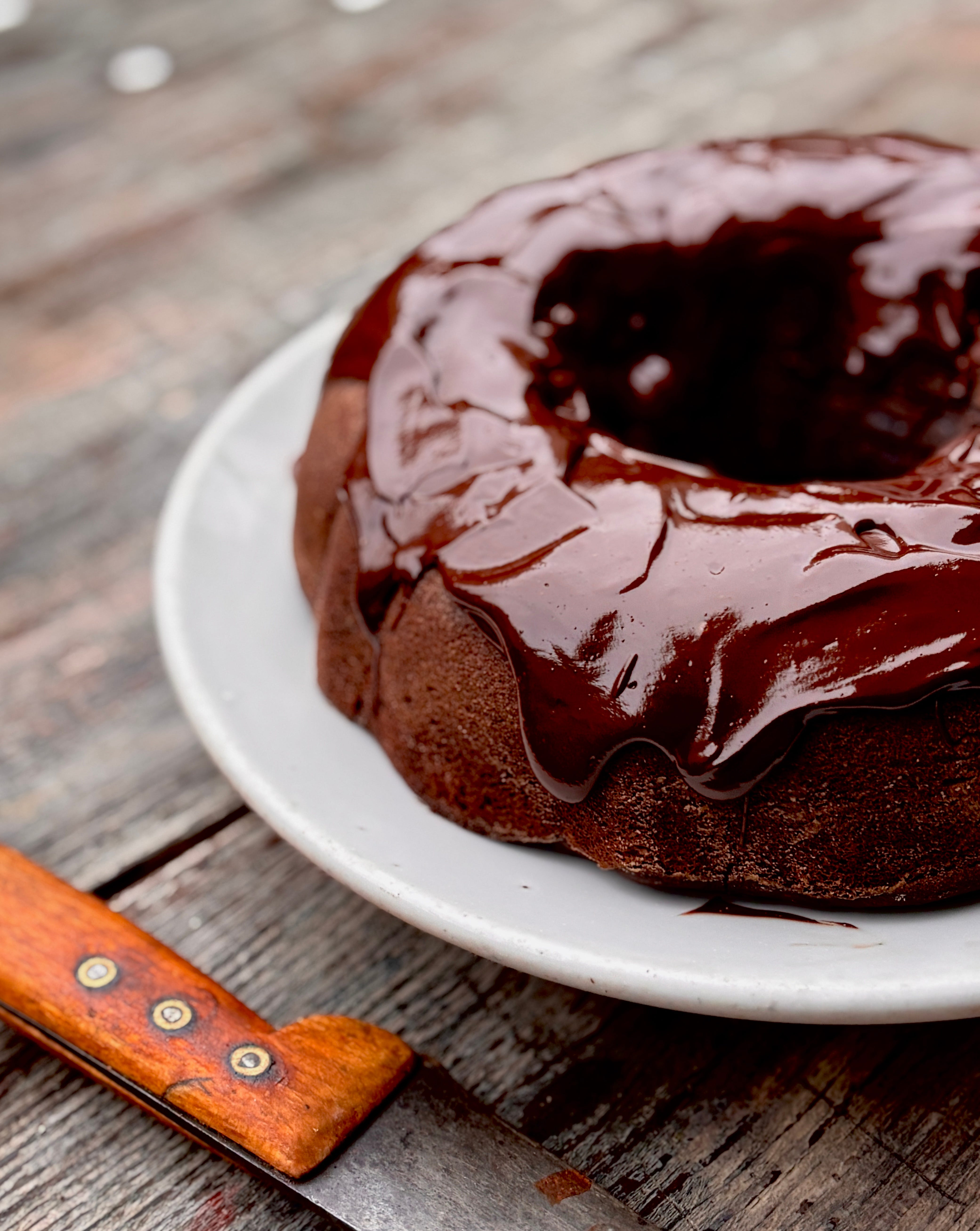
Dorie’s book lives up to its name and is filled with recipes that you’ll want to make anytime. The cake was a hit, and you don’t need to wait until Thanksgiving to enjoy it. You can be an angel and make it for your friends or family whenever the mood for an all-American chocolate cake hits.

Devil’s Chocolate Cake
10-12 servings
Adapted from Dorie’s Anytime Cakes by Dorie Greenspan
When you assemble the cake, you might think that the cake pan doesn’t seem filled with enough batter when you put it in the oven. But it will rise considerably while it bakes. Like most chocolate desserts, err on the side of underbaking rather than overbaking. Check the cake before the recommended baking time.
If you don’t have a bundt pan, a tube pan with smooth sides and a hollow tube in the middle will work. As mentioned in the post (thanks George!), the best pan coating is baker’s nonstick spray, the kind that has flour in it, such as Baker’s Joy or Bak-Klene, which is available at Webstaurant, Amazon, and Williams-Sonoma. Nordic Ware recommends not using regular nonstick spray on their bundt pans, which causes buildup and degrades the coating.
Dorie recommends topping the cake, after it’s glazed, with rosettes of whipped cream and either maraschino or amarena cherries, or chocolate sprinkles or shaved chocolate. I kept it squarely in the chocolate direction but if I wasn’t bringing the cake to a party, I’d serve it with ice cream.
For the cake
1 1/3 cups (180g) all-purpose flour
1/2 cup (45g) unsweetened cocoa powder, preferably Dutch-process
3/4 teaspoon baking soda
1/2 teaspoon baking powder, preferably aluminum-free
1 teaspoon kosher or sea salt
10 tablespoons (140g, 5oz) unsalted butter, at room temperature
1/2 cup (100g) granulated sugar
1/2 cup (100g) packed light brown sugar
3 large eggs, at room temperature
2 teaspoons pure vanilla extract
2 ounces (60g) bittersweet or semisweet chocolate, chopped and melted, but kept warm and fluid
1/2 cup (125ml) whole milk, at room temperature
1/2 cup (125ml) very hot dark coffee (you can use instant coffee mixed with boiling water)
4 ounces (115g) bittersweet or semisweet chocolate, finely chopped (or use mini-chips)
For the glaze
4 tablespoons (60g, 2 ounces) unsalted butter, cut in small pieces
4 ounces (115g) bittersweet or semisweet chocolate, chopped
1 1/2 tablespoons light corn syrup
To make the cake, spray the inside of a 10-cup bundt pan with baker’s spray (see the headnote), or grease it with butter or shortening, making sure to get it into all the crevasses, then dust the pan with flour, tapping out the excess.
Preheat the oven to 350ºF (175ºC).
Sift together the flour, cocoa powder, baking soda, baking powder, and salt into a medium bowl.
In the bowl of a stand mixer fitted with the paddle attachment, or by hand, beat the butter and sugars on medium-high speed until light and fluffy, about 4 minutes. Stop the mixer midway and scrape down the sides to make sure the ingredients are mixing evenly.
Turn the mixer down to medium speed and add the eggs one at a time, stopping the mixer to scrape down the sides. Once the eggs are incorporated, mix in the vanilla and melted chocolate.
With the mixer on its lowest speed, add one-third of the dry ingredients, then half of the milk. Add half of the remaining dry ingredients, mix in the rest of the milk, then mix in the last of the dry ingredients. With the mixer still on low speed, mix in the very hot coffee. Remove the bowl from the mixer and stir in the chopped chocolate by hand with a flexible spatula.
Scrape the batter into the prepared cake pan. Rap the pan gently on the counter a few times and smooth the top. Bake the cake until a toothpick inserted into the center comes out almost clean, with moist crumbs attached, about 35 minutes, but check it at the 30-minute mark, or before.
Let the cake cool on a wire rack for 10 minutes. Unmold the cake on the wire rack and let cool completely before glazing.
To make the glaze, place the butter, chocolate, and corn syrup in a medium bowl. Place the bowl over a small saucepan of barely simmering water, stirring it occasionally until the butter and chocolate are melted and the mixture is smooth. Remove from the heat and let cool for a minute or two to thicken slightly, enough so that it can be spooned over the top of the cake, but not too runny that it will all run down the sides and off the cake.
Pour or spoon the glaze over the top of the cake, using a butter knife or offset metal spatula to encourage it to flow down the sides.
Storage: The cake can be stored for up to two days at room temperature, if well-wrapped.

*When I was in pastry school here in France, one of the chef-instructors said to add a little red food coloring to chocolate batters to enhance the color of the chocolate. Just an FYI.

Addendum
Just a footnote here on bundt pans. These are the two that I own:
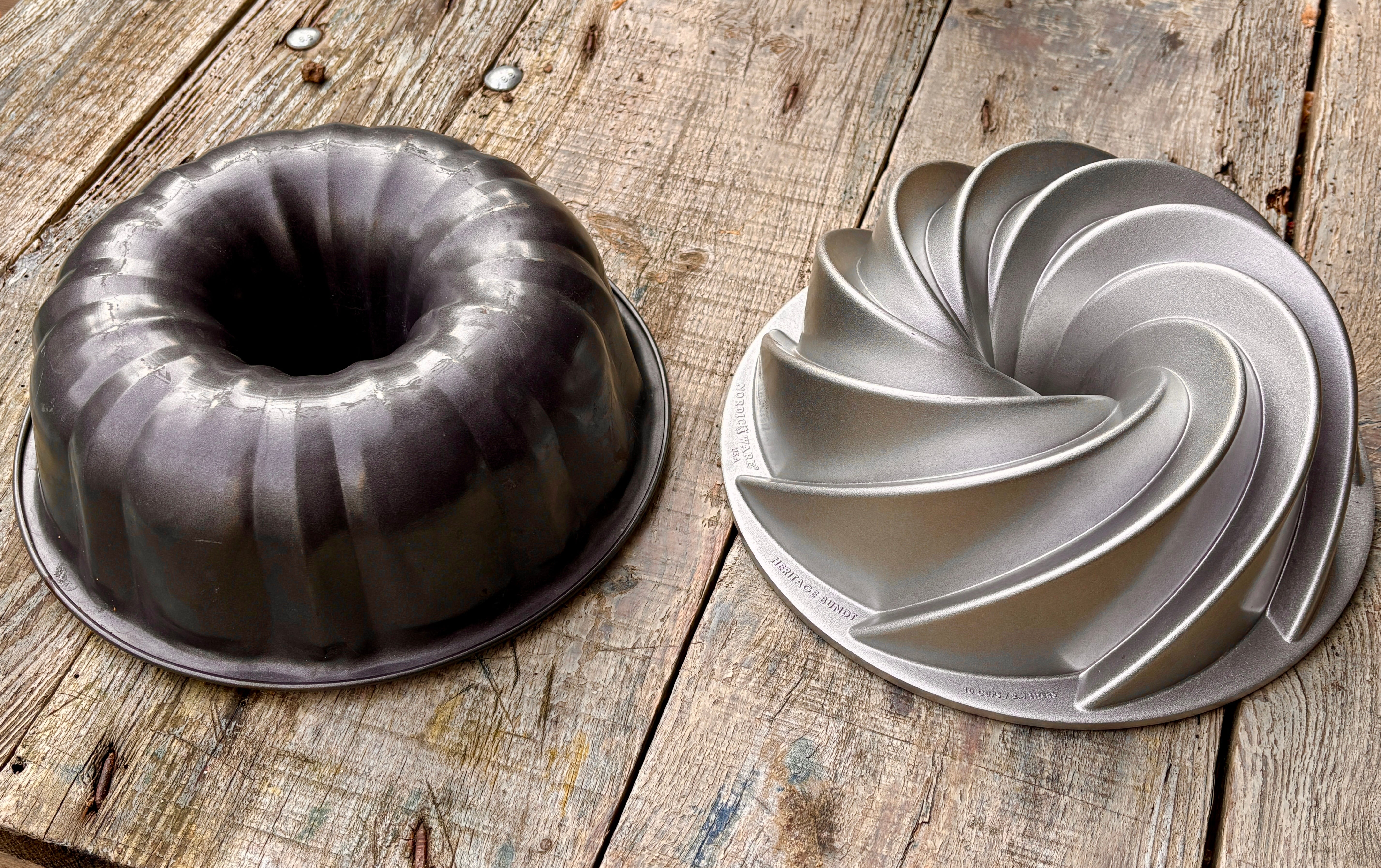
The one on the left is an oldie, but goodie that I bought at a stall at the market in Paris. The one on the right is a newer on from Nordic Ware. I had trouble getting it out of the one on the right, and used the one on the left for the cake in this post.
As mentioned above, my esteemed food stylist friend says that he always uses a baking spray with flour in it on bundt pans, and they pop out easily. That was echoed a few days ago when I was talking to baking expert Brian Hart Hoffman, founder and editor-in-chief of Bake from Scratch magazine, who shared that sentiment and said to always use baking spray with flour in bundt and fluted pans, not regular non-stick spray.
Confession: I may have used non-stick spray on the pan on the above right a few times, as well as run it through the dishwasher - another no no, which may be why cakes stick in it sometimes. Nordic Ware has a video about how to wash a bundt pan.
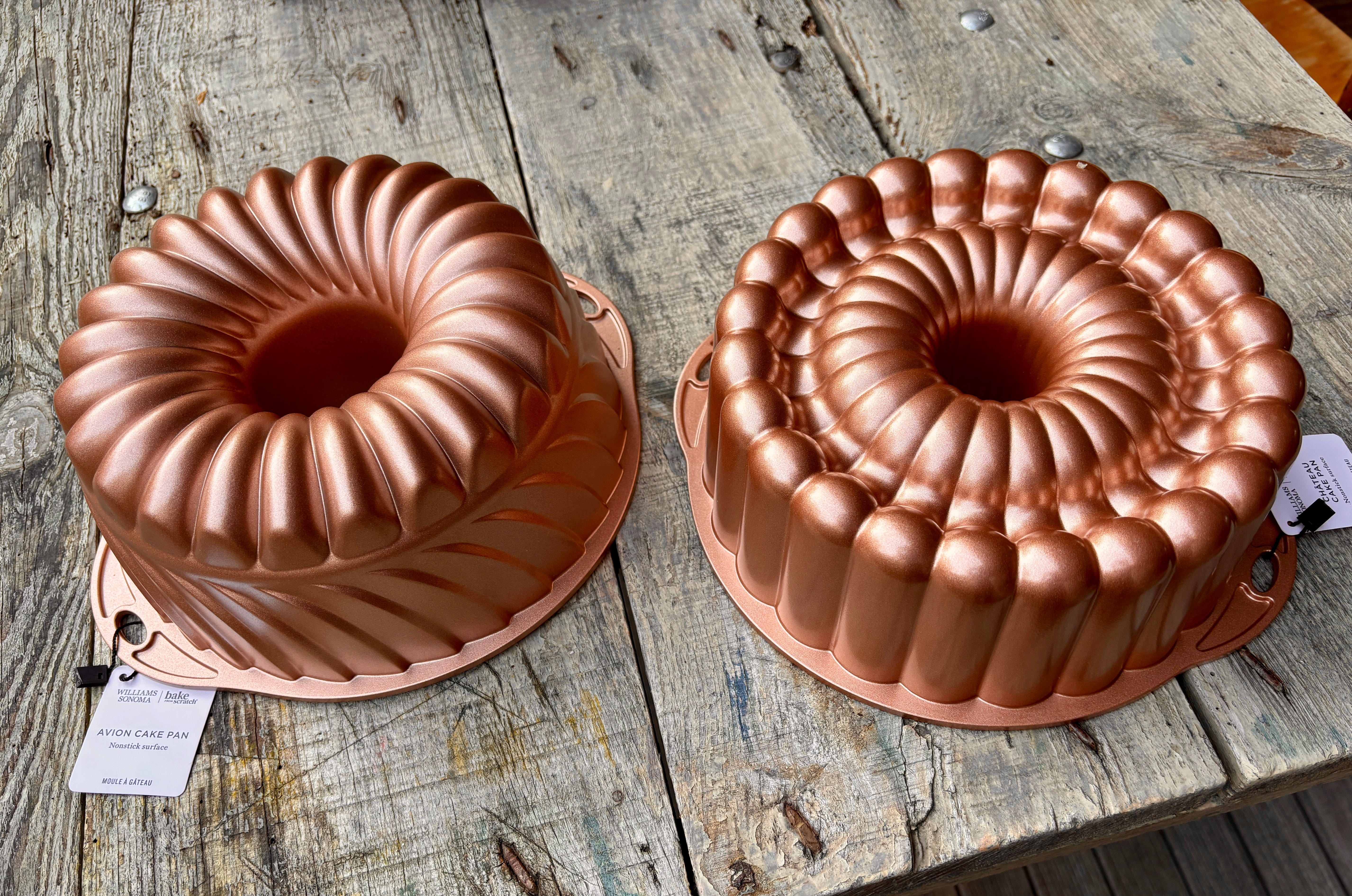
As a treat, Brian brought me two of the cake pans he designed for Williams-Sonoma, below, so I can start afresh with my shiny new fluted tube pans. And this time, I’ll treat them right!
David, what I super-nice surprise to find my cake in your newsletter. Thank you!
I've been making the cake in Brian Hart Hoffman's Chateau pan from Williams-Sonoma ever since I got it. I love the way the glaze fills the pan's "moat". No problems turning it out of the pan, but then, I always spray Bundt pans, including my intricate, twisty, curvy NordicWare pans. I use an oil-and-flour combo spray (usually Pam or Baker's Joy, but I'll be looking for Bake Kleen) that I even out with a silicone brush. I think of it as a belt-and-suspenders move, but it works for all kinds of pans.
Again, my thanks. Also bushels of hugs and sweet holiday wishes to you and Romain - xoxo Dorie
Okay, you're right that airelles are not the same as cranberries, but they're close enough. And I say this as someone who absolutely HAS to have cranberry sauce with turkey and stuffing. I recently wrote about the complexities of making Thanksgiving dinner for French people here https://jeanlavigne.substack.com/p/culture-shock-thanksgiving-with-the, and resolved not to make it again in France unless it's for and with my fellow Americans.
We have turkey every year for Christmas with my French family and my father in law makes his famous farce (stuffing) that I really strongly dislike - with ground pork, pork liver, tompettes de mortes (black mushrooms), and garlic. After suffering in silence for the first two years, I now bring my traditional American stuffing each year, made with bread, onions, celery, sage, and butter. It's a huge hit with everyone at the gathering who is under 60.