

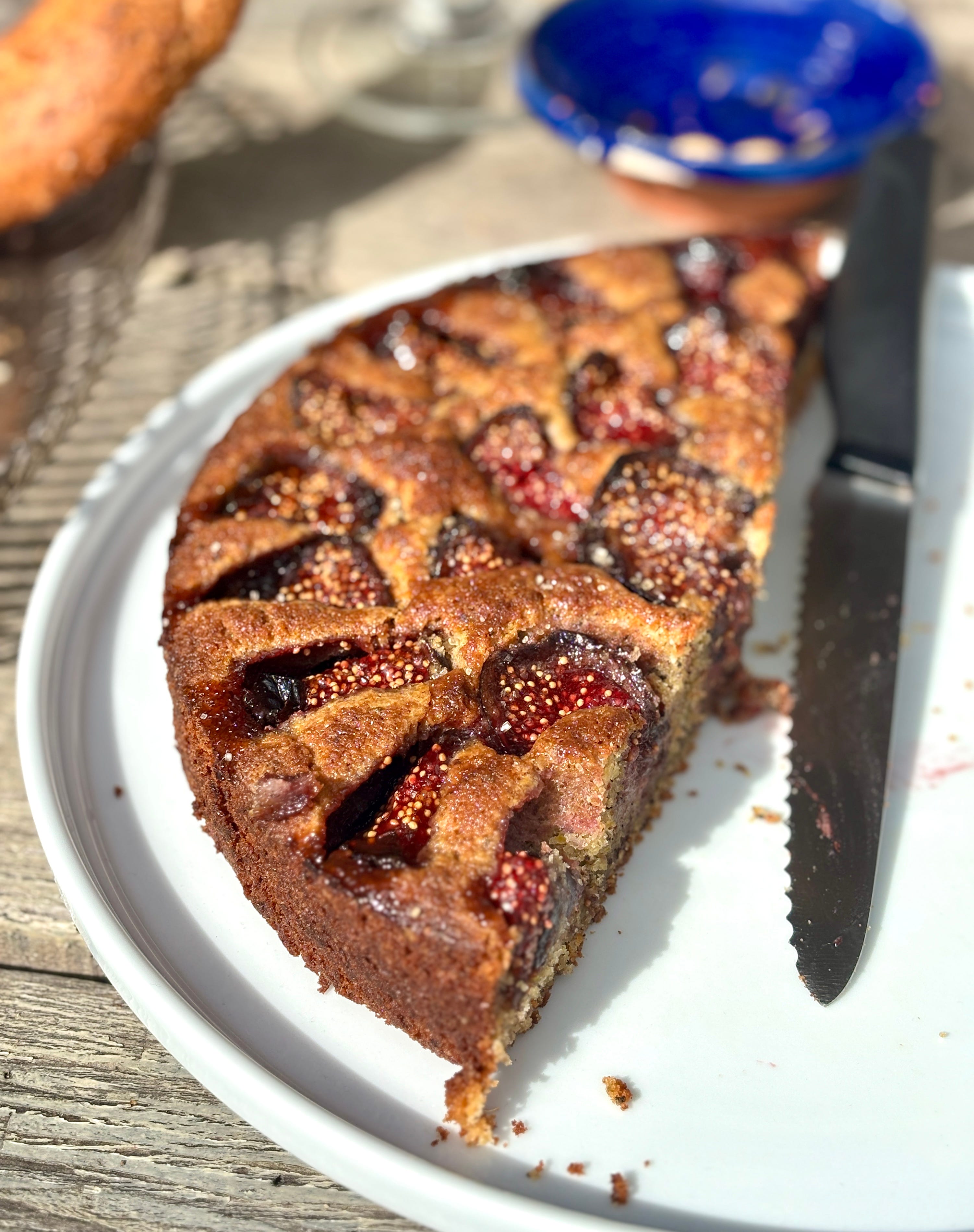
Don’t hate me, but I picked so many figs this summer while in Provence that my freezer is jam-packed with figs, and I need to figure out what to do with them. (Well, you can dislike me for the puns.)
The upside is that I have a lot of figs. I made a lot of jam and roasted several batches of figs, but still, I ended packing away a lot of them in my freezer. The best way to freeze figs is to cut them in half, place them cut side down on baking sheets lined with parchment paper, and slide them in the freezer. Once frozen, gently peel the figs off the paper paper and separate them, then double-wrap the fruit in bags before putting them back in the freezer.
I know that “storage” questions about recipes are a big deal to some people, some say fruit can be frozen for a few months, or indefinitely (which is essentially true; anything can be stored in the freezer forever, unless your freezer konks out.) But when I wrote Drinking French, I was getting a lot of questions about how long bottles of liquor last. I mentioned that to a well-regarded distiller, and asked him what he thought. He looked at me, and replied, “They last as long as they taste good.”
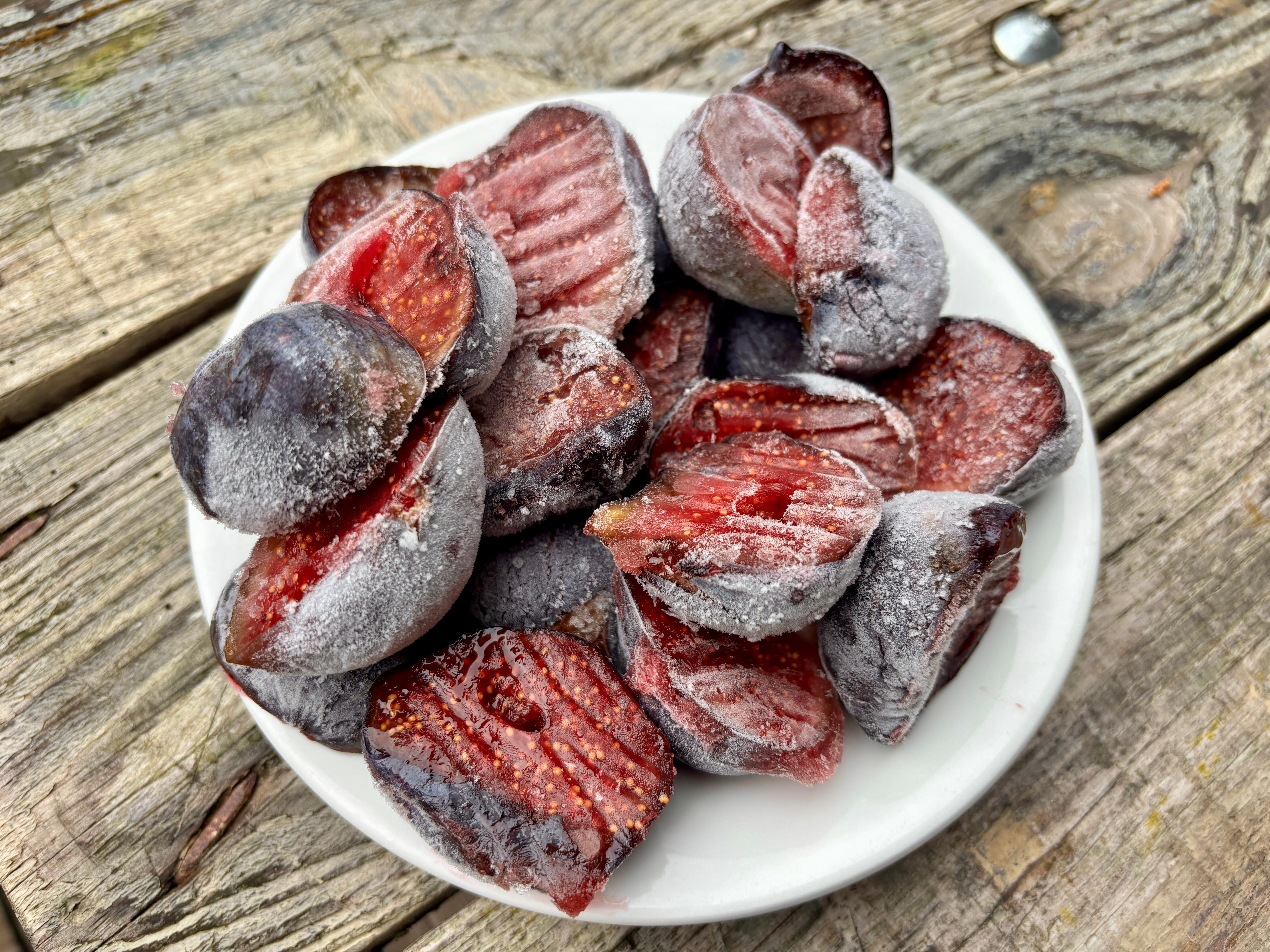
While there are still some fresh figs at the market in Paris, we recently took advantage of the dwindling warm weather and invited some friends for lunch on Sunday afternoon. Since I was tasked with making dessert, I thought about making a fig cake and remembered one by Yotam Ottolenghi, and decided to make that with my bounty of frozen figs.
When I lived in San Francisco, I never in a gazillion years imagined myself using or buying frozen fruit. But in Paris, fresh raspberries, sour cherries, and blueberries are super expensive, and raspberries and blueberries are often sold in plastic clamshell containers, so they’re not the best of the bunch.
When I need a lot of them, I go to Picard, the frozen food store. In addition to berries (which are popular these days for using in les smoothies), they also sell frozen pineapple, mangoes, mirabelle plums, sour cherries, apricots, avocados, strawberries, white peaches, passion fruit, rhubarb, and figs. Obviously they have more freezer space than I do!
I don’t have the same allegiance to Picard that many people in France do, but when I want a pound (450g) of raspberries or a kilo (2.2 pounds) of pitted sour cherries, that’s where I go. So if you need to rely on frozen fruit to make this cake, I won’t judge. And if anyone does, just tell them that it’s très Parisian.
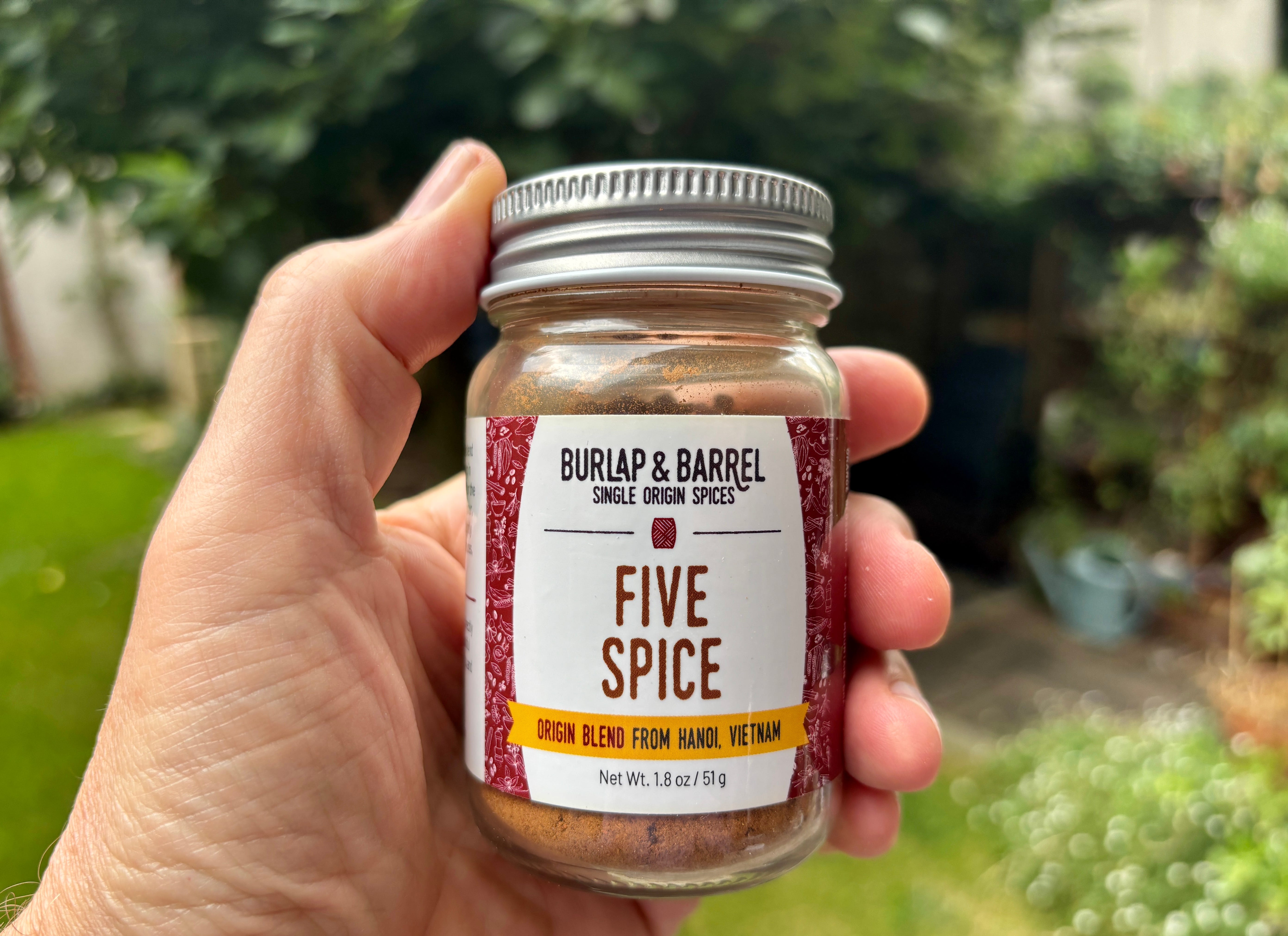
I went a bit rogue with Yotam’s recipe, and used five-spice powder in lieu of star anise. I also had a bit of pistachio flour left over from another baking project so mixed that with almond flour. Nut flour gives this cake an extra-moist richness, while adding flavor. The texture is denser than loftier cakes, so I added some baking powder to the mix to lighten things up a tad.
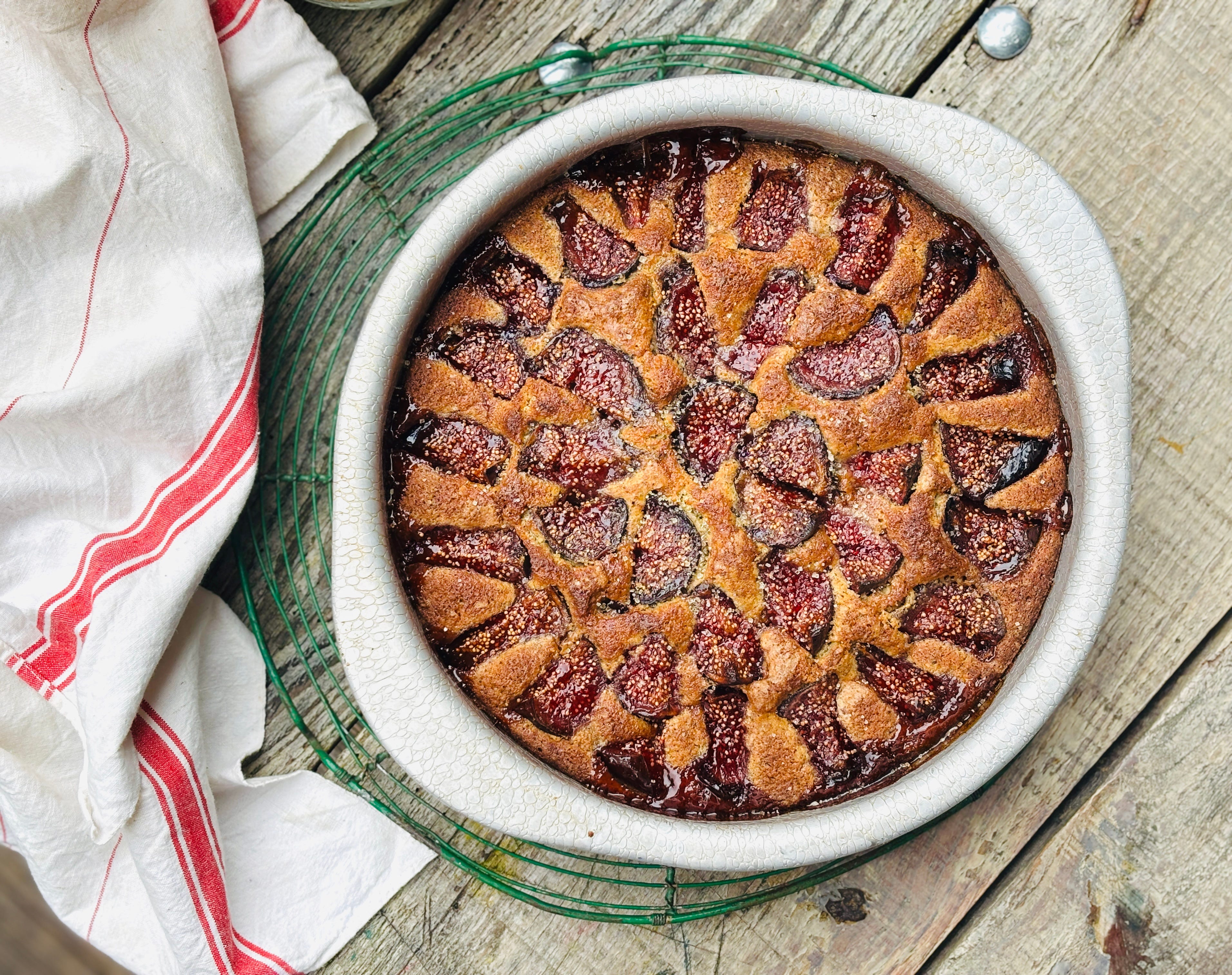
The cake came out beautifully and while the weather got a little iffy while we were having lunch*, no one left the table when dessert came out. I served the cake with fig leaf ice cream and a few pieces of roasted figs alongside with some of their juice, but you could pair it with berries if they’re in season, or even sabayon.
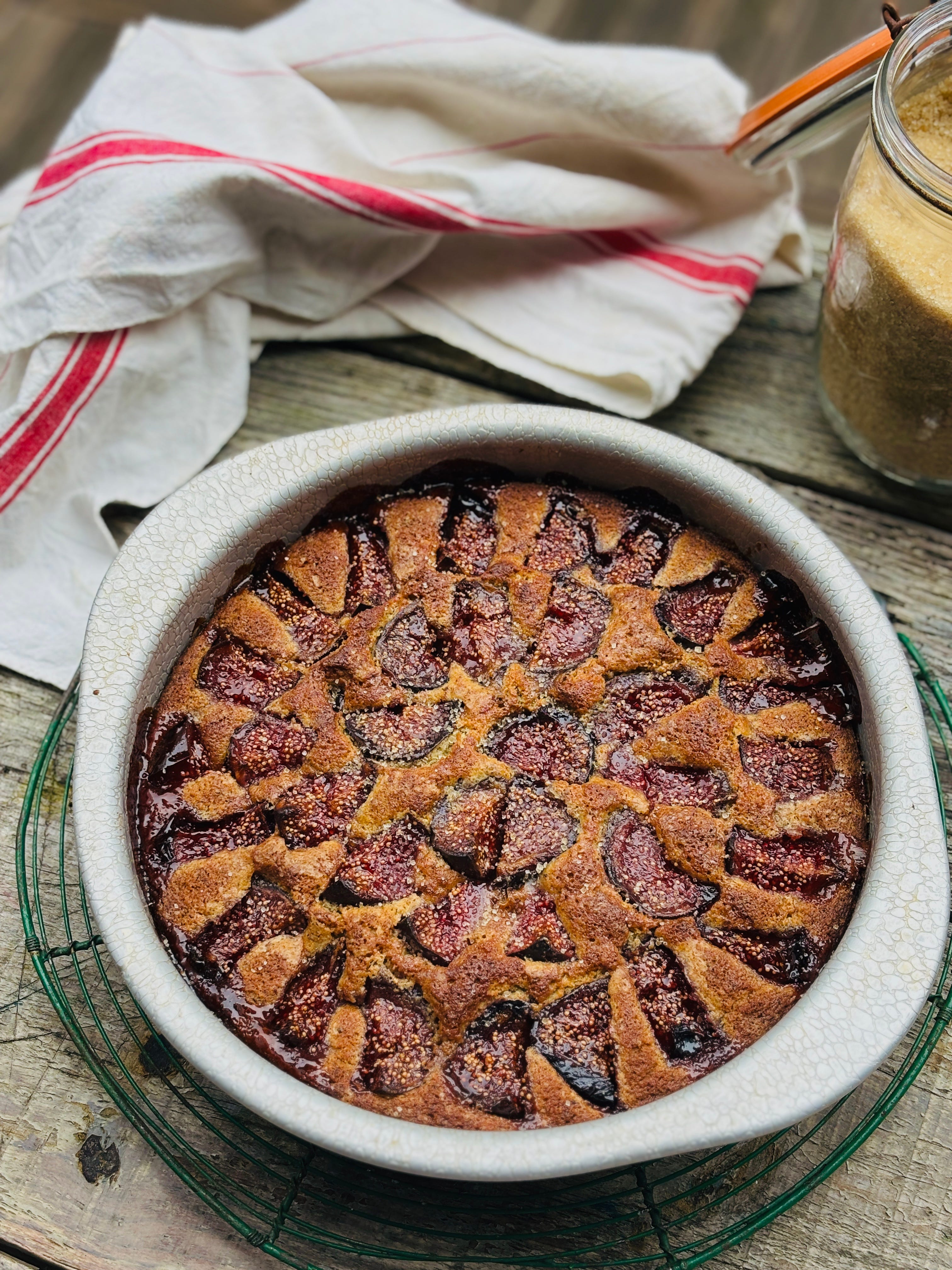
If you can get your hands on some figs, give this cake a try. If you can’t get them fresh, or frozen, right now there are quetsches (prune plums) at the market, and you could use those, cut into quarters if they’re large, or cut in half if they’re small.

Fig-Yogurt Cake
8 servings
Adapted from the Fig, Yogurt and Almond Cake by Yotam Ottolenghi
The original recipe called for only almond flour, but I had some pistachio flour on hand so used a mix. If you use all almond flour, your cake will be lighter in color than mine. I also swapped in five-spice powder for the ground star anise called for in the original recipe.
It’s a pretty versatile cake so you could add ground cardamom seeds instead of the five-spice powder. Since cardamom can be pretty strong, perhaps use only 1/2 to 3/4 teaspoon. Or slightly crushed anise seeds would be nice; they pair very well with figs. If figs aren’t available, this cake would be tasty with sliced plums or apricots in their place. You could probably use poached pears, although I haven’t tried them. If you do, you should probably cut them into very thick slices after poaching so they stay moist due to the long-ish baking time.
Due to the nut flour, this cake is quite hearty, not airy. Thanks to the oil in the nuts, it’ll keep nicely for 3 or 4 days at room temperature under a cake dome or well wrapped. The cake is just fine to serve on its own, but since I had guests and had some fig leaf ice cream in the freezer, I served it with that. Vanilla ice cream would work as well, or just a dollop of tangy Greek yogurt, whipped cream, or sabayon. A few poached or roasted figs with some of their liquid also pairs nicely with the cake.
200g (7 ounces) unsalted butter, cubed, at room temperature
200g (1 cup) granulated sugar, plus 2 teaspoons granulated sugar or 1 tablespoon turbinado (coarse) sugar crystals, for sprinkling over the finished cake
3 large eggs, at room temperature
100g (7 tablespoons) Greek yogurt
1 teaspoon vanilla extract or a scant 1/2 teaspoon almond extract
180g (1 3/4 cups) almond flour
100g (scant 3/4 cup) all-purpose flour
1 teaspoon baking powder, preferably aluminum-free
1/2 teaspoon salt
1 teaspoon five-spice powder
10-12 fresh or frozen figs (if using frozen figs, don’t defrost them first)
Line the bottom of a 9-inch (24cm) cake pan with a round of parchment paper. Butter the sides of the pan or coat with nonstick spray.
Preheat the oven to 400ºF (200ºC).
In the bowl of a stand mixer fitted with the paddle attachment, or by hand, beat the butter and 200g (1 cup) of granulated sugar together on high speed until light and fluffy, about 3 minutes.
Stop the mixer, then add the eggs one at a time, mixing them in on low speed, stopping the mixer after each addition to scrape down the sides of the bowl. Mix in the yogurt and extract.
Whisk together the almond flour, all-purpose flour, baking powder, salt, and five-spice powder in a medium bowl. Stir the dry ingredients into the butter mixture just until combined. Scrape the batter into the prepared cake pan and smooth the top.
Quarter the figs and place the figs in concentric circles, cut side up, around the top of the cake.
Bake the cake for 15 minutes, then reduce the temperature to 325ºF (170ºC) and bake the cake until it just feels set in the center, about 40 minutes longer.
Remove from the oven and place the cake pan on a cooling rack. Let cool a few minutes, then run a sharp knife around the outside of the cake to loosen the sides of the cake from the pan. Sprinkle the remaining sugar over the top of the cake.
To remove the cake from the pan, it’s easier to do while the cake is still slightly warm. Run a knife again around the outside of the cake, and place a dinner plate upside down on top of the cake pan. Holding the cake pan and the plate firmly in place with both hands, turn both over simultaneously and the cake will release. (If it’s a bit stubborn and doesn’t come out easily, you can place the cake in a warm oven for a few minutes or set it over the low flame of a gas burner for a few seconds.)
Remove the parchment paper from the bottom of the cake, invert a serving platter over the bottom of the cake, then turn the cake and the platter over simultaneously.

Haha you're forgiven for the fig puns but "fig-uritively" speaking, I hope you didn't have to "reconfigure" your freezer to accommodate all the fruit! You're a "figurehead" to many of us but I'm hoping you don't cook the figs while in your "jammies" or while "jamming" to some tunes. 🤣♥️
"They last as long as they taste good.” Words to live by for so many things. Just use your judgement and don't stress about the rules. And eat cake!