

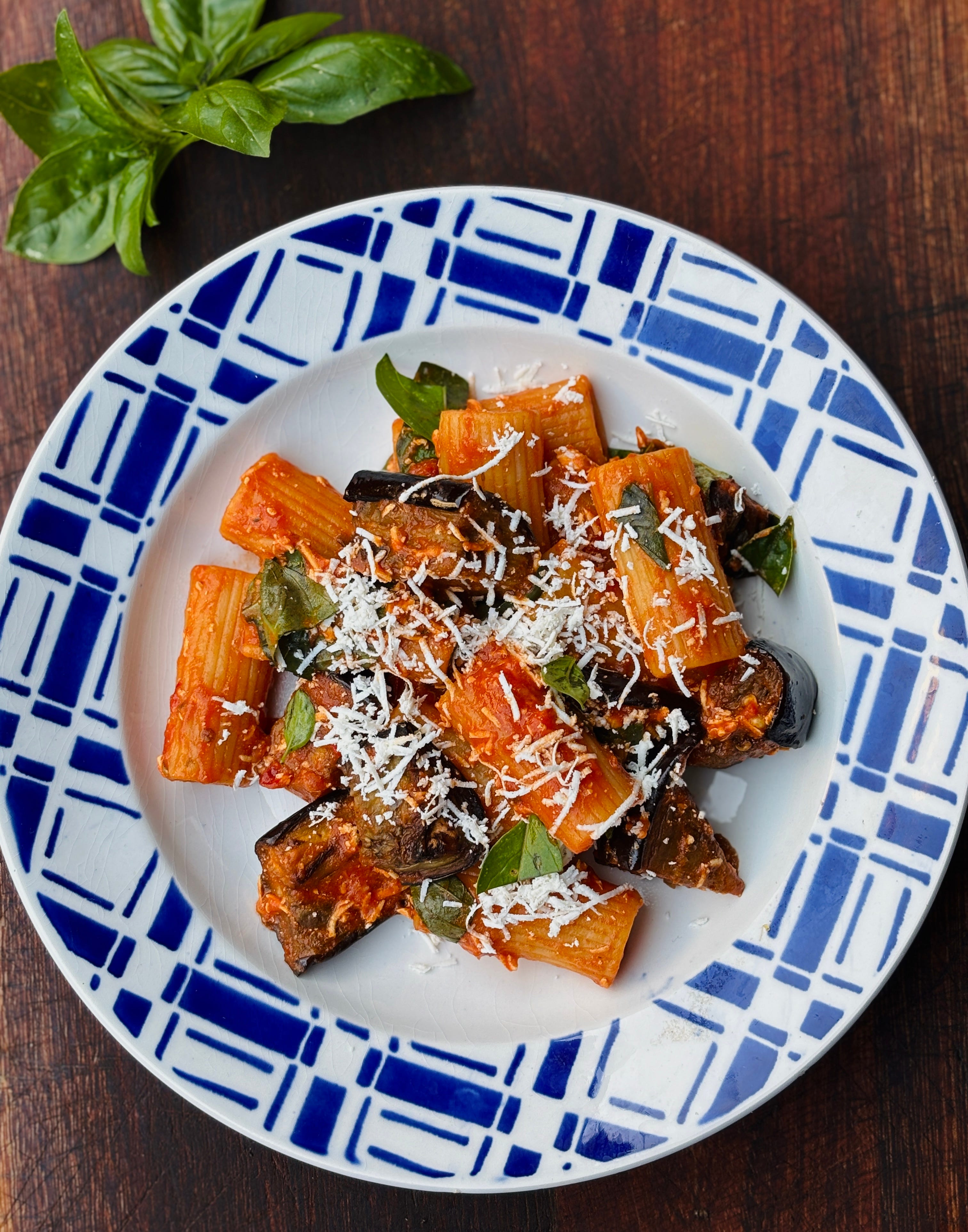

Sorry, but I’m not going to tell you not to cook or bake during the summer, which it seems like everyone else is telling you to do. (Or is that not to do?) Every summer bring a new avalanche of recipes that tell you that you don’t need to spend any more time than necessary in the kitchen. That’s just not me.
I can’t not cook or bake. It’s in my DNA and it’s what I do every day, rain or shine, sun or sleet, hail or snow. I learned to make finicky, buttery puff pastry in a brutally hot kitchen in the summer, and I also worked the grill station as a line cook during heat waves and when I had to get anywhere near the flames, it felt like my face was searing off.
No matter how hot we are in our home kitchen, anyone who is working in a restaurant or bakery kitchen is working where the temperatures are at least 20 to 50% hotter than where we are. When I went to Sicily a few years ago, it felt like you were literally inside of an oven if you stepped outside. Last week temperatures in Paris reached 101ºF (38ºC), which has become the new norm here.
There are a lot of important things to be concerned about in today’s world, but for some reason, nothing seems to stir the pot more than an inauthentic Italian pasta. If I went around the internet calling out inauthentic French food, I wouldn’t have time to make dinner or write a newsletter. If people want to put a teaspoon of honey in their cornbread, drink a cappucino in the afternoon, or put green beans on a salade niçoise, I’ll allow it.
This Sicilian pasta is inspired by the classic version of pasta alla Norma in Fabrizia Lanza’s latest book, The Food of Sicily: Recipes from a Sun-Drenched Culinary Crossroads. Fabrizia is a true Sicilian and an incredible cook. I’ve been to her cooking school and farm in Sicily, which was established by her late mother, Anna Tasca Lanza. (I wrote about it here and here.) While there, I was fortunate enough to cook with Fabrizia and her team of Sicilian women. We couldn’t really understand each other, but we all understood cooking, and we got along well. One day, one of the women pulled me aside, pointed a finger in my face, and said (in Italian), “You belong here.”
That, I understood. Sicily is perhaps a challenging place to live, but I’d love to give it a go for six months. I’ve always wanted to learn Italian but when I mentioned that to a few Italian friends, they all said, “David, you won’t learn Italian in Sicily. You’ll learn Sicilian.” (Which, interestingly, is a language with no future verb tense.)
People in Sicily know a thing or two about cooking in a hot kitchen. Summer there can be ridiculously hot, although I’ve always wanted to go and make tomato paste with Fabrizia and her cooks, which happens in late August when all the tomatoes ripen. The tomato paste, called estratto, was one of the best things I ever put in my mouth. I think it was Alice Waters who called it, “Summer in a spoonful.”
The process takes a few days, and requires spreading the tomato sauce on tables and letting it bake in the full-on Sicilian sun all day. At night, the reduced paste is scraped off the tables to protect it from humidity, then spread out again over and over the next few days to let it concentrate further. Fabrizia offers workshops if you want to do it. (2025 is already sold out.)
I am one of those people who doesn’t necessarily follow recipes when I make pasta, so I toggled the recipe a bit. Ninety percent of the time I boil pasta, sauté ingredients (greens, bacon, etc.), drain the pasta, mix them all together, and serve it with grated or crumbled cheese. And while I like, and sometimes make, fresh pasta, I also like the structure and heft of dried pasta, which is traditionally used in this dish.
It’s worth seeking out good-quality dried pasta. The better ones are made with semolina from hard wheat and don’t contain any flour. (Brands like Barilla use wheat flour, which makes the pasta cook faster, but the result is softer and soggier pasta.) Bronze-cut pasta has a rougher surface, so sauce clings to it better.
One easy-to-find brand of good-quality pasta is Rummo, which I used here. But you can check the ingredient list of various brands where you live and find one that you like.
I’ve made Fabrizia’s caponata before, a Sicilian eggplant salad of sorts, which is markedly better with deep-fried eggplant, and she also recommends frying the eggplant in oil for this pasta recipe, which I adapted loosely from her book. If you want to do it that way, she heats up 2 inches (5cm) of vegetable oil and fries the eggplant in batches, letting the pieces drain on a cooling rack. Other people make this pasta by frying the eggplant in a thinner layer of oil in a skillet, which is another possibility.
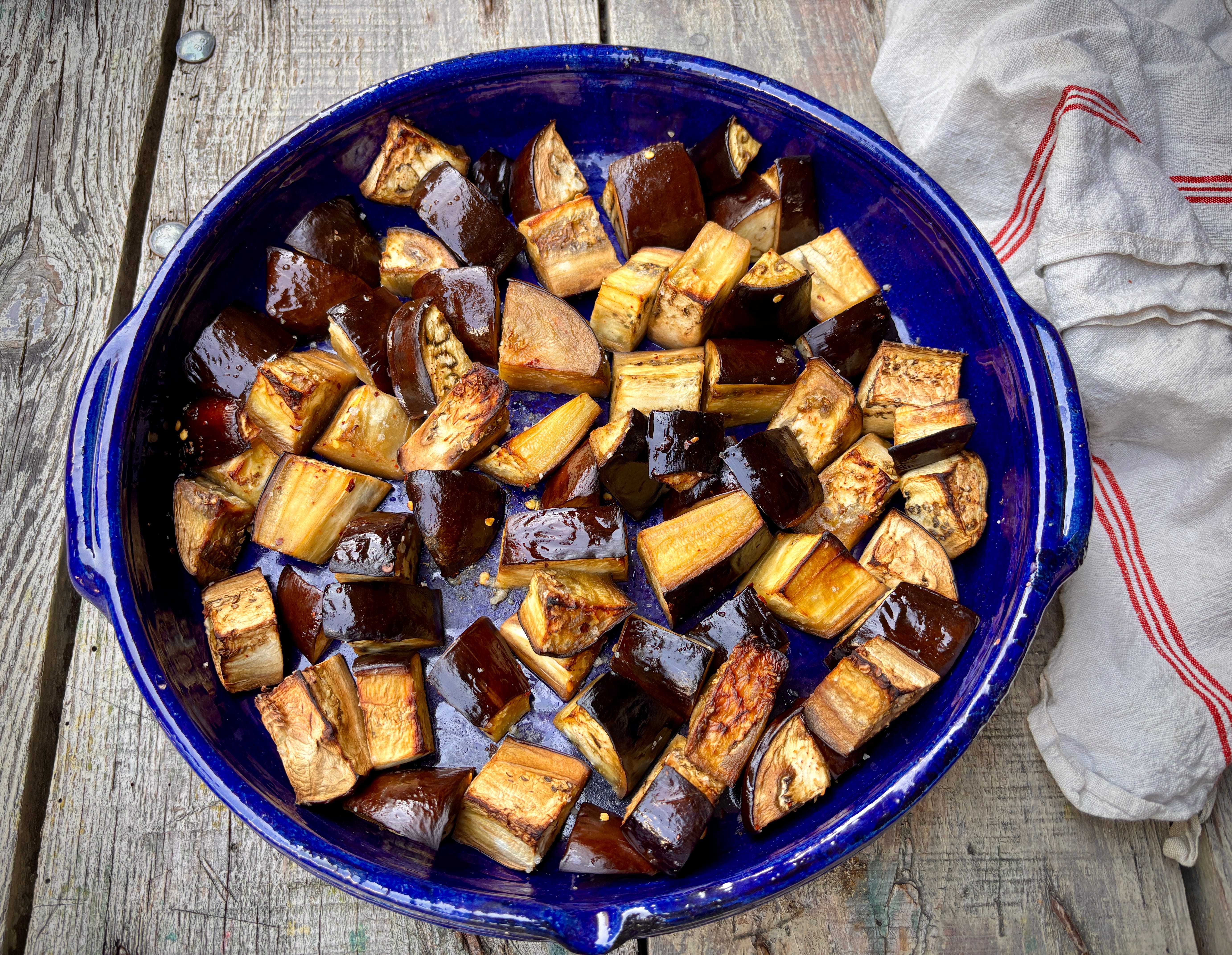
I went a different route and baked the eggplant in a baking dish, which yields very good results and is less messy. Usually when I bake eggplant I do it on a sheet pan so it browns and gets a bit crisp, but crispy isn’t really what you’re after here. You want the pasta, the sauce, and the softened eggplant, to meld together. Fabrizia prefers to heap the eggplant on top of the pasta, rather than mixing it in, which is another option. Since she’s a native Sicilian, I think the authenticity police might leave her alone.
The other benefit of baking the eggplant is if you get the timing right, you can take it directly out of the oven and stir it into the pasta. But don’t worry, in the recipe I note that you’ve got some wiggle room. This is a low-stress pasta and it’s hard to screw up.
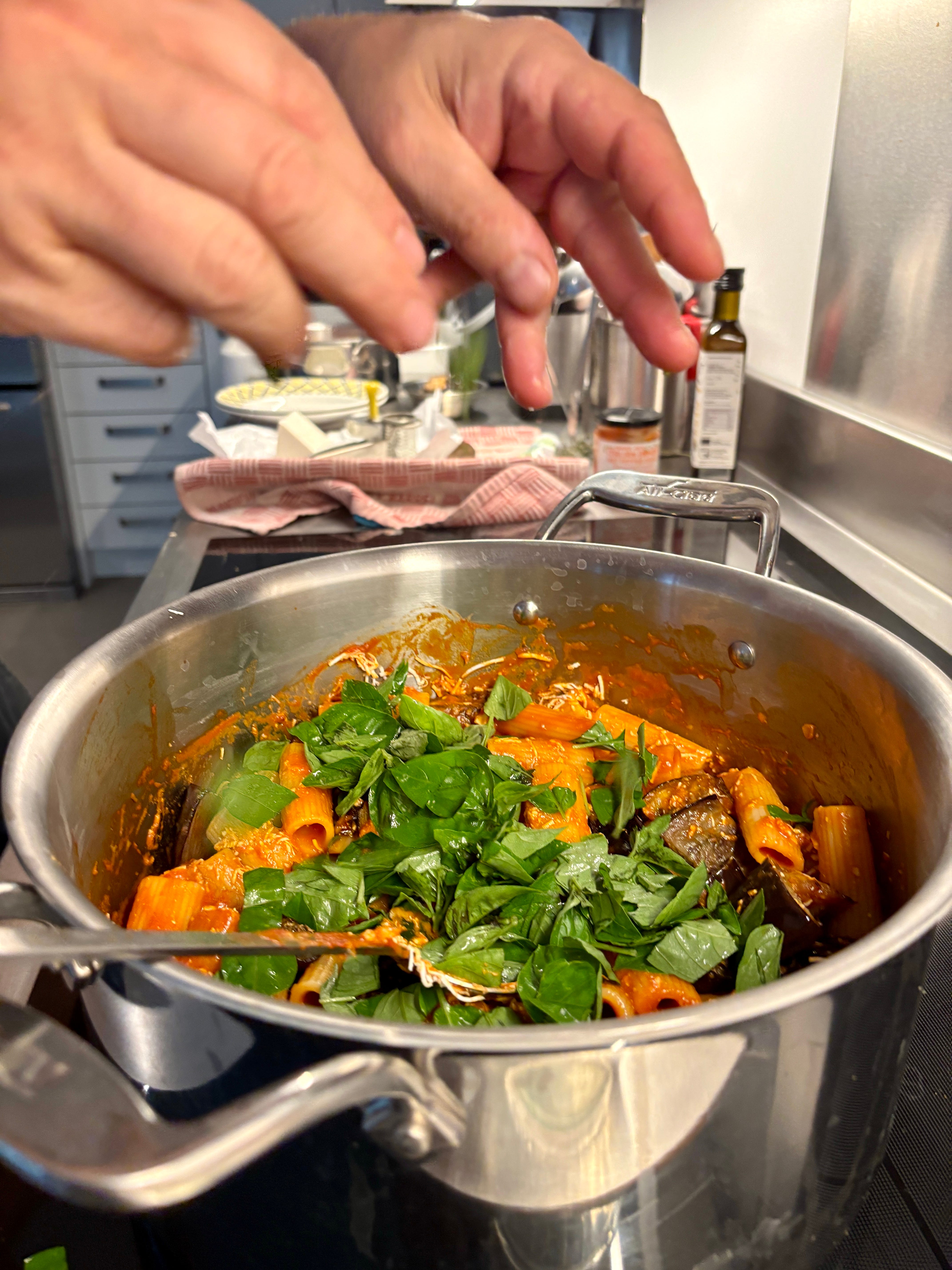
I made this pasta on a very hot day, with no air-conditioning, so I know you can do it wherever you are. And while I don’t live in Sicily, cooking pasta during the height of summer might make me a little Sicilian after all. But I can’t really say what’ll happen if you prepare it, as I’m trying not to talk about the future, in preparation for my next trip (or longer stay?) to Sicily.
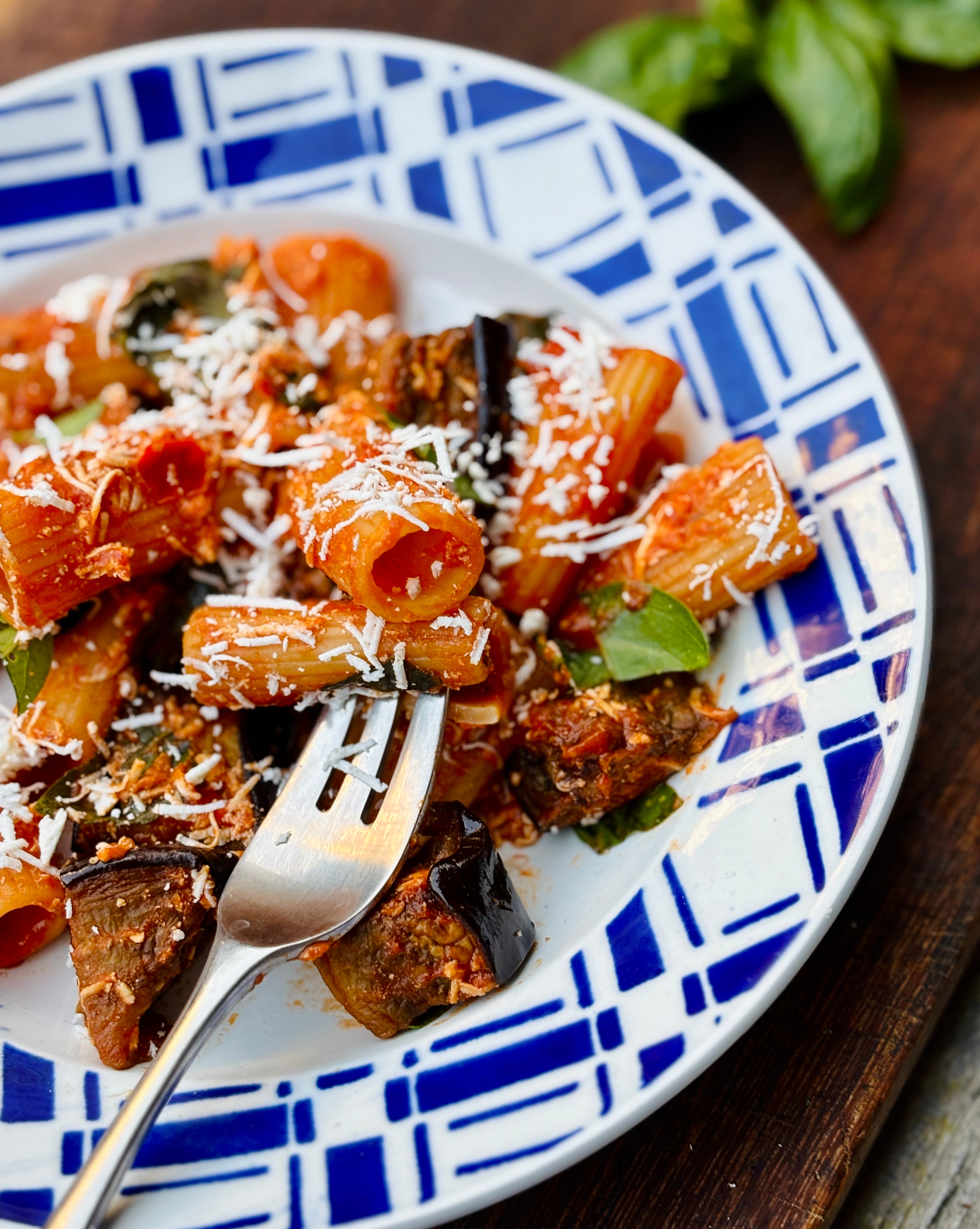

Pasta alla Norma
Inspired by The Food of Sicily by Fabrizia Lanza
Makes six servings
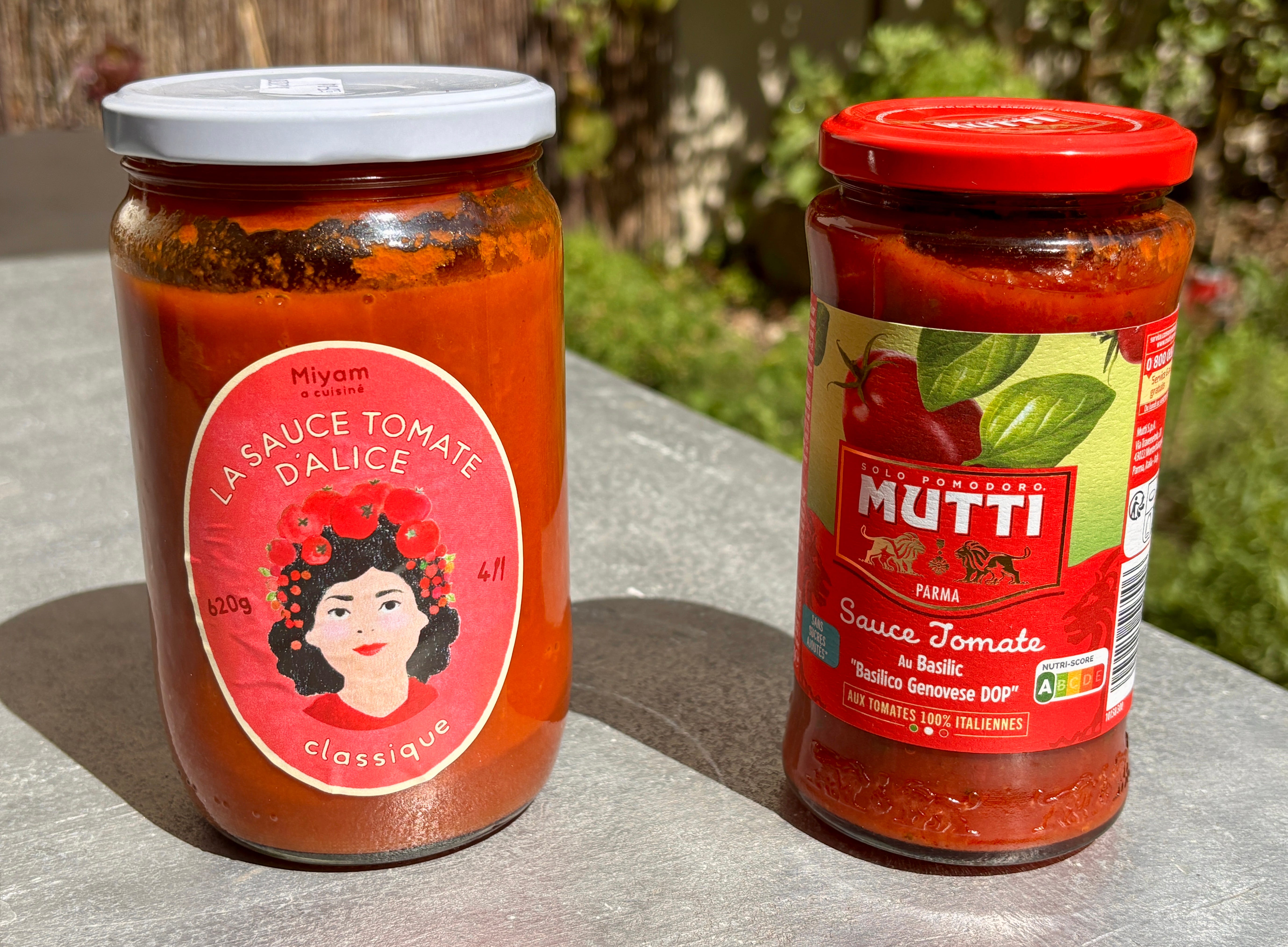
The jarred tomato sauce I bought for this ended up being just okay (the one on the left, shown in the post), but a few tablespoons of tomato paste livened it up. If you have a favorite homemade tomato sauce recipe, feel free to use it here.
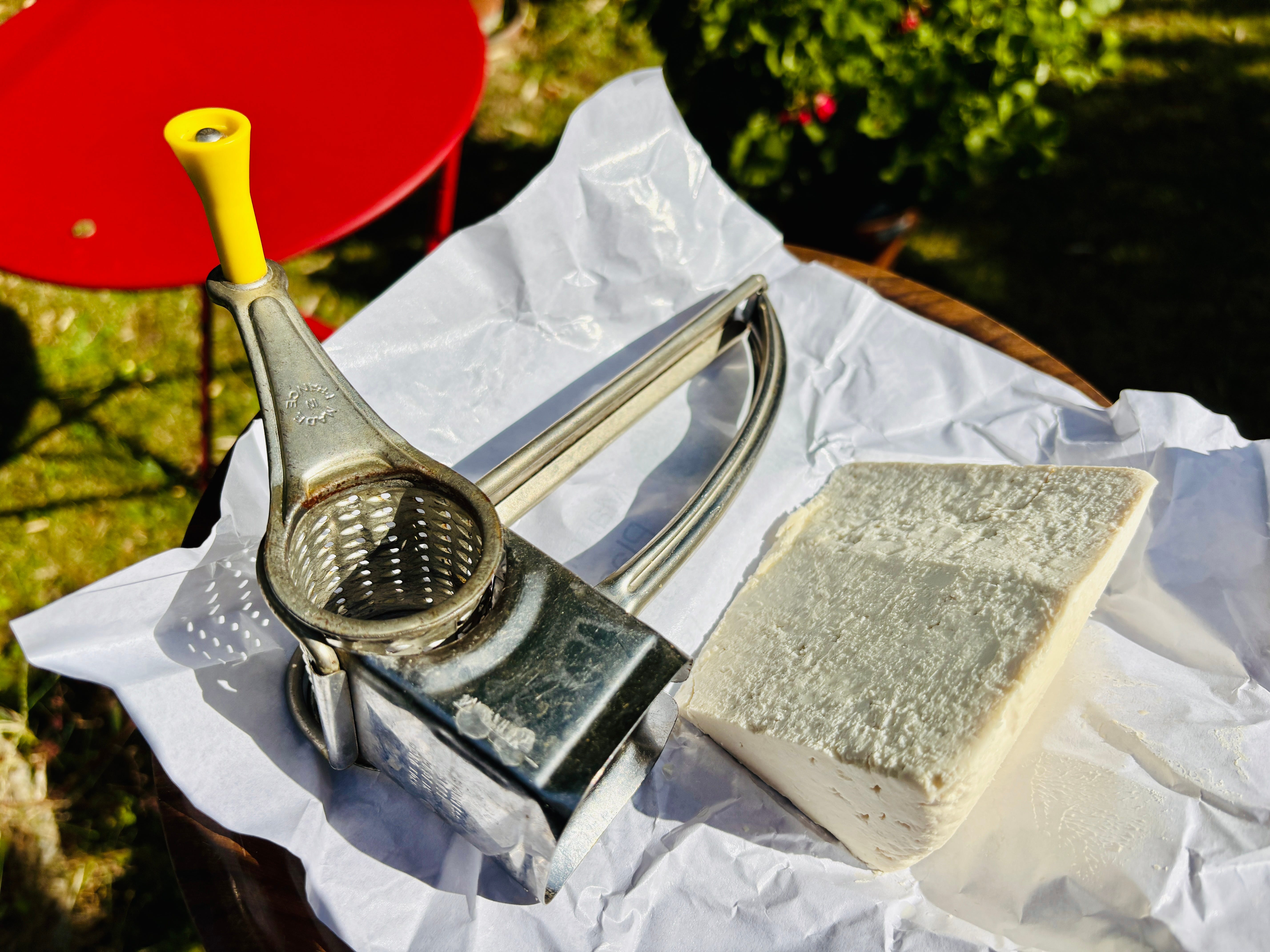
Ricotta salata, the cheese traditionally grated over the top, may not be easy to find where you are. I get mine at the Italian food shop Tolbiac L’Italien in the covered Marché Beauvau at the Aligré market in Paris. If you can’t find ricotta salata, pecorino cheese, which is made from sheep’s milk, is different, but a possible substitute.
Variations: You can’t call it Pasta alla Norma, but you could top it with crumbled feta cheese instead of the ricotta salata and call it Pasta alla _______ [fill in your name there, such as, pasta alla Gretchen or Bill]. I’ll sometimes sneak a spoonful of Calabrian chile paste (the Trader Joe’s one is excellent) into the tomato sauce, which is also an unauthorized addition, but adds a nice bit of zip to the pasta.
2 pounds (1kg) eggplant
1/3 cup (80ml) extra-virgin olive oil
1 1/4 teaspoons kosher or sea salt, or 3/4 teaspoon fine table salt
1/4 teaspoon dried chile flakes
3 cups (720ml) tomato sauce
Optional: 3 tablespoons tomato paste
1 pound (450g) dried tubular pasta, such as rigatoni or ziti
2 ounces (60g) ricotta salata cheese, grated, plus more for serving
1 bunch of fresh basil
Preheat the oven to 375ºF (190ºC). Cut the eggplant into 1- to 1 1/4-inch (3cm) cubes. Toss the eggplant pieces in a baking dish that will hold them all in a fairly even layer, with the olive oil, salt and dried chile flakes.
Bake the eggplant until it’s completely cooked through (no one wants al dente eggplant…), stirring midway during baking, about 45 minutes. Poke a paring knife into a few chunks. They’re done when the knife meets no resistance.
[If your timing is a bit off, you can leave the eggplant in the turned-off oven. It’s hard to overcook eggplant, so you can keep it there and add it when you’re mixing the pasta with the sauce.]
While the eggplant is cooking, bring a big pot or Dutch oven of salted water to a boil.
Warm the tomato sauce with the tomato paste in a medium saucepan and set aside, keeping it warm.
Cook the pasta until just tender. Reserve 1/2 cup (125ml) of the pasta water, then drain the pasta. Return the pasta to the pot and add the warm sauce and the reserved pasta water. Cook over medium heat, stirring frequently for a minute or so, until the sauce is thick and clinging to the pasta. Add the eggplant and stir gently until it’s incorporated.
Remove from the heat and stir in the 2 ounces (60g) grated ricotta salata as well as a generous handful of torn or coarsely chopped basil leaves. Taste, and add a bit more salt if desired.
Divide the pasta into bowls and grate additional cheese over the top along with a few torn basil leaves. Or, you can serve the pasta from the pot (or transfer it to a serving bowl), scatter torn fresh basil leaves over the top, and let people help themselves, adding their own grated cheese to their portions

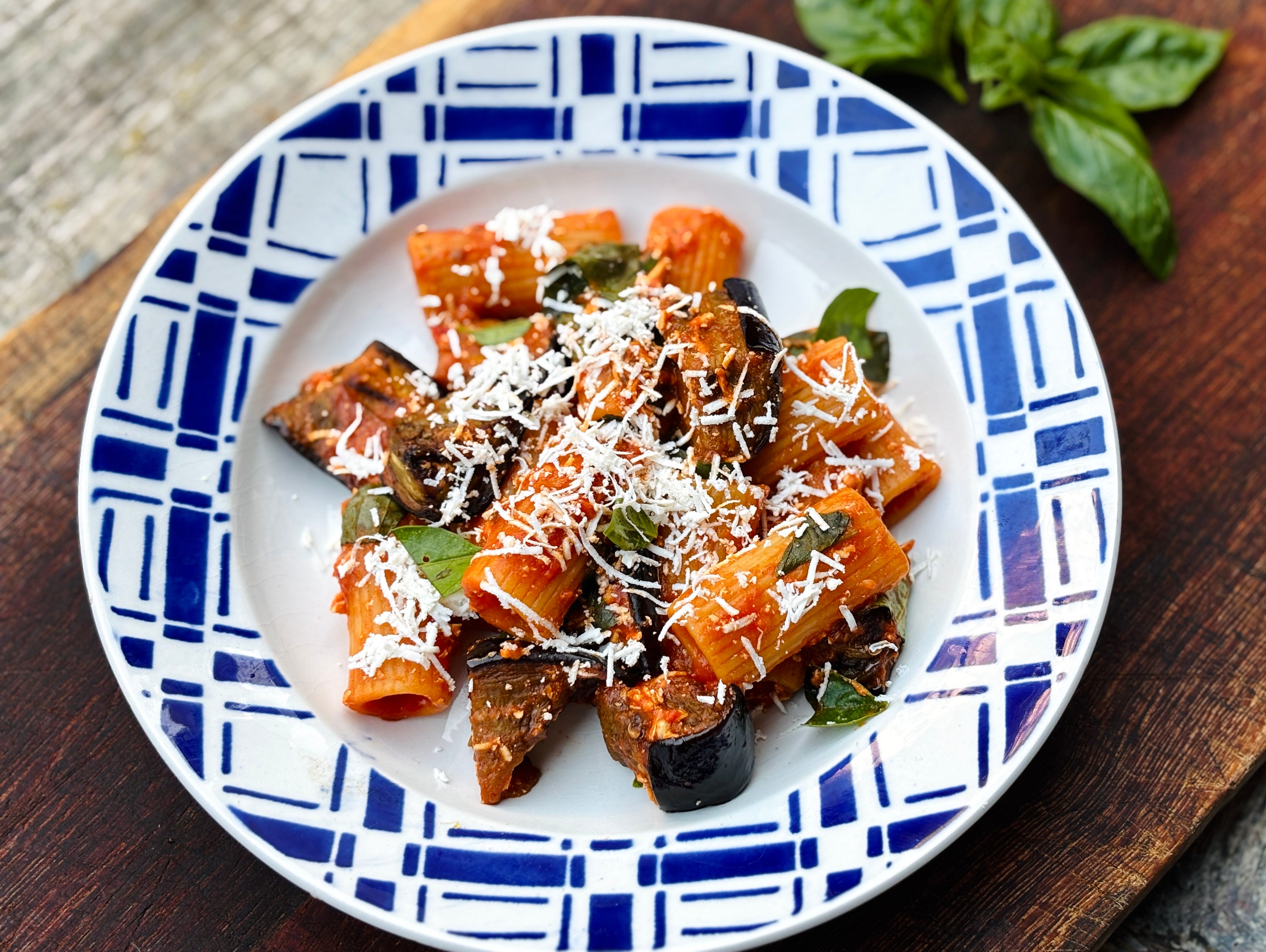
A favorite around here. I can always boil water for pasta but in summer the idea of frying, or turning on the oven can be a bridge too far. On those days I use my covered grill to grill/roast thick slices of eggplant slathered with olive oil before quickly cubing them to add to the pasta. More “gooshy” edges than your method - still pretty good.
Summer Sicily trip 3 yrs ago, of 2 weeks, from Taormina to Trapani, inland & coastal, then to Palermo (we missed Cefalu etc), we had a foundational pasta alla Norma in Taormina, then proceeded to sample this dish everywhere we explored, maybe 5 or 6 versions. All but one credible, winning version, laid the groundwork for a kind of flavor & texture obsession, which continues. Of course, missing are Sicilian tomatoes-eggplant, etc. Discovered an exceptional, fresh representation at Eataly- if you’re fortunate to have this palace of Italian flavor & tradition nearby. And yes, in NYC, ricotta salata is available most everywhere. Thnx for this piece, a truly satisfying dish.