

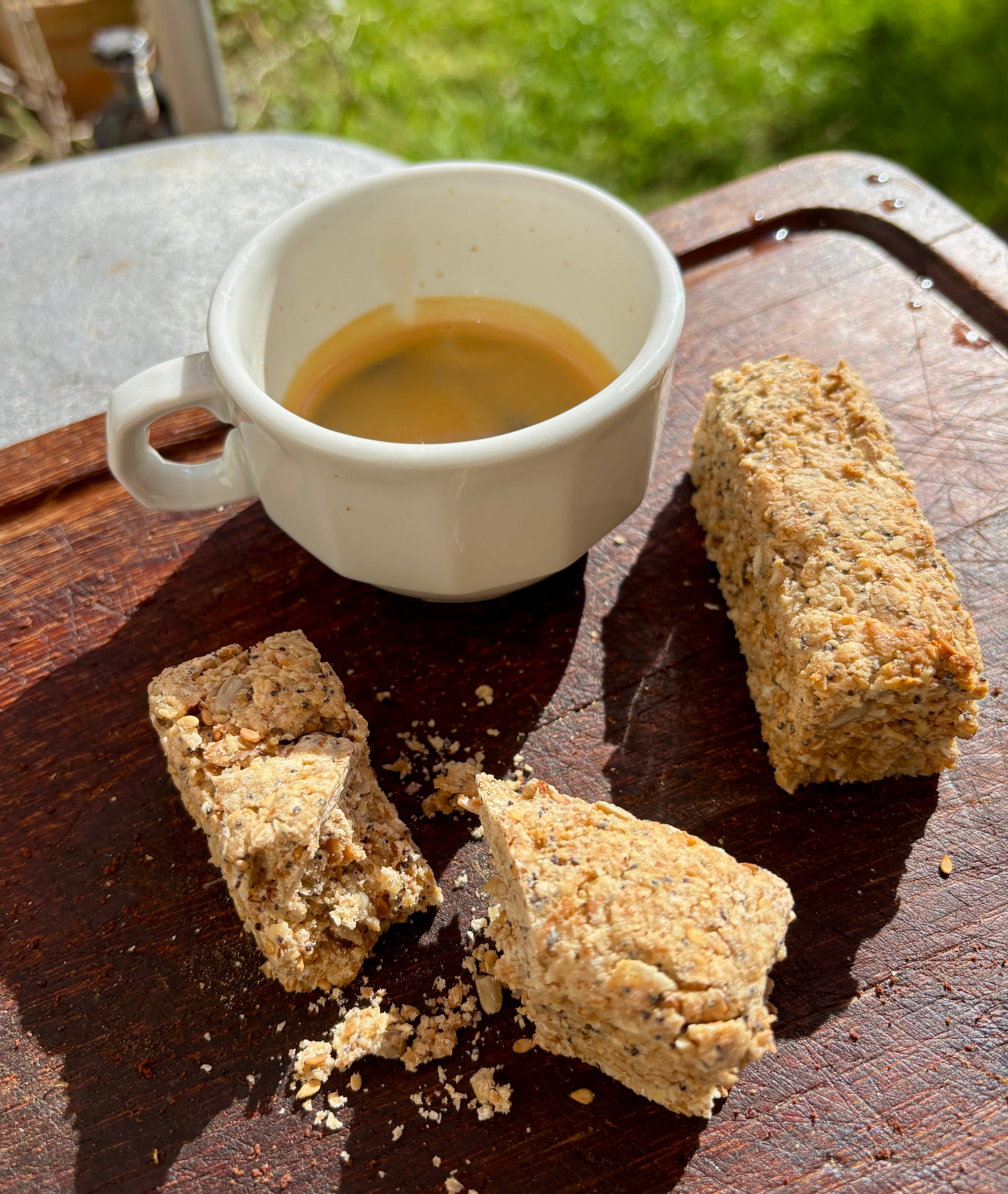

Rusks are all over the place, and there seem to be many ways to make them. Some are plain and almost look like shortbread while others are more rough ‘n’ ready and heartier. Those are made with whole grains and seeds, which are the ones I reached for when I was in South Africa, where they’re also known as Beskuit. You can read some tidbits about their history here and here, but primarily they were a way to preserve bread.
For those who don’t like sweet things, rusks fit that bill. Many people tell me they don’t like sweets, but I remember trying to coax people into eating roasted cocoa nibs when they first were on the market, and almost everyone I gave a few to try, spit them out.
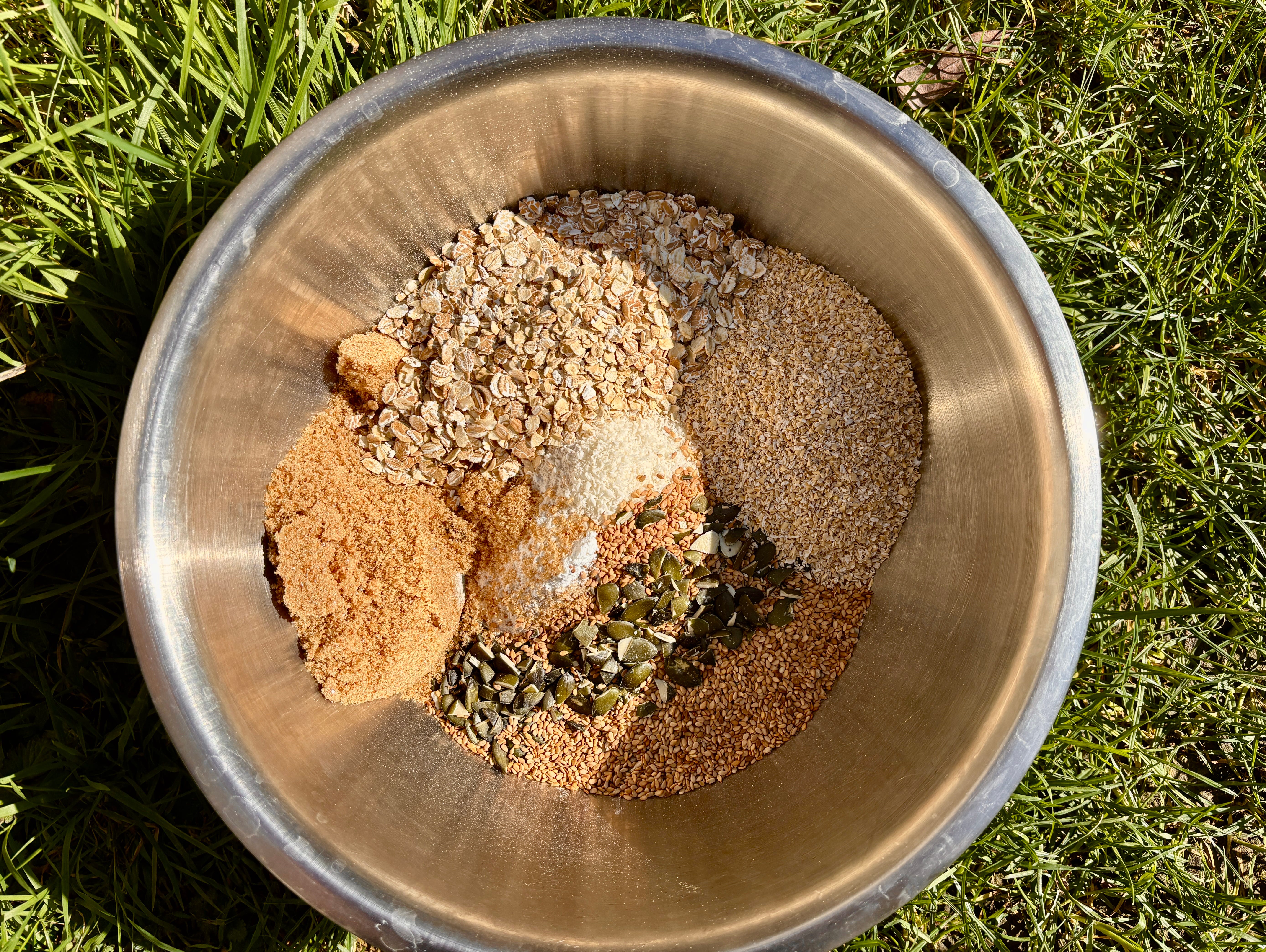
If you’ve eaten a lot of granola bars or flapjacks, you’d not be wrong expecting rusks to be sweet since they share similar ingredients: oats, brown sugar, seeds, etc., but they’re quite rustic and hearty. I fell for them when a guest I had from South Africa came to Paris, when I was leading chocolate tours, and she brought me a bag of rusks that she’d made, along with a recipe. For years, I’d wanted to make them, but the recipe languished in my want-to-try recipe file, where it kept moving to the bottom of the always-growing heap.
However, during a recent trip to South Africa, I found bags of rusks in every food shop and corner store. When my friends had groceries delivered to where they lived, the shop included a bag of rusks as a thank-you gift. And I made it my duty to eat a lot of rusks while I was there — and to finally make them when I got home.
South Africans are very enthusiastic about rusks. Some are rather bread-like and smooth, while others are rougher and coarser around the edges. Rusks are so popular in South Africa that there are even special pans and cutters for making and shaping them.
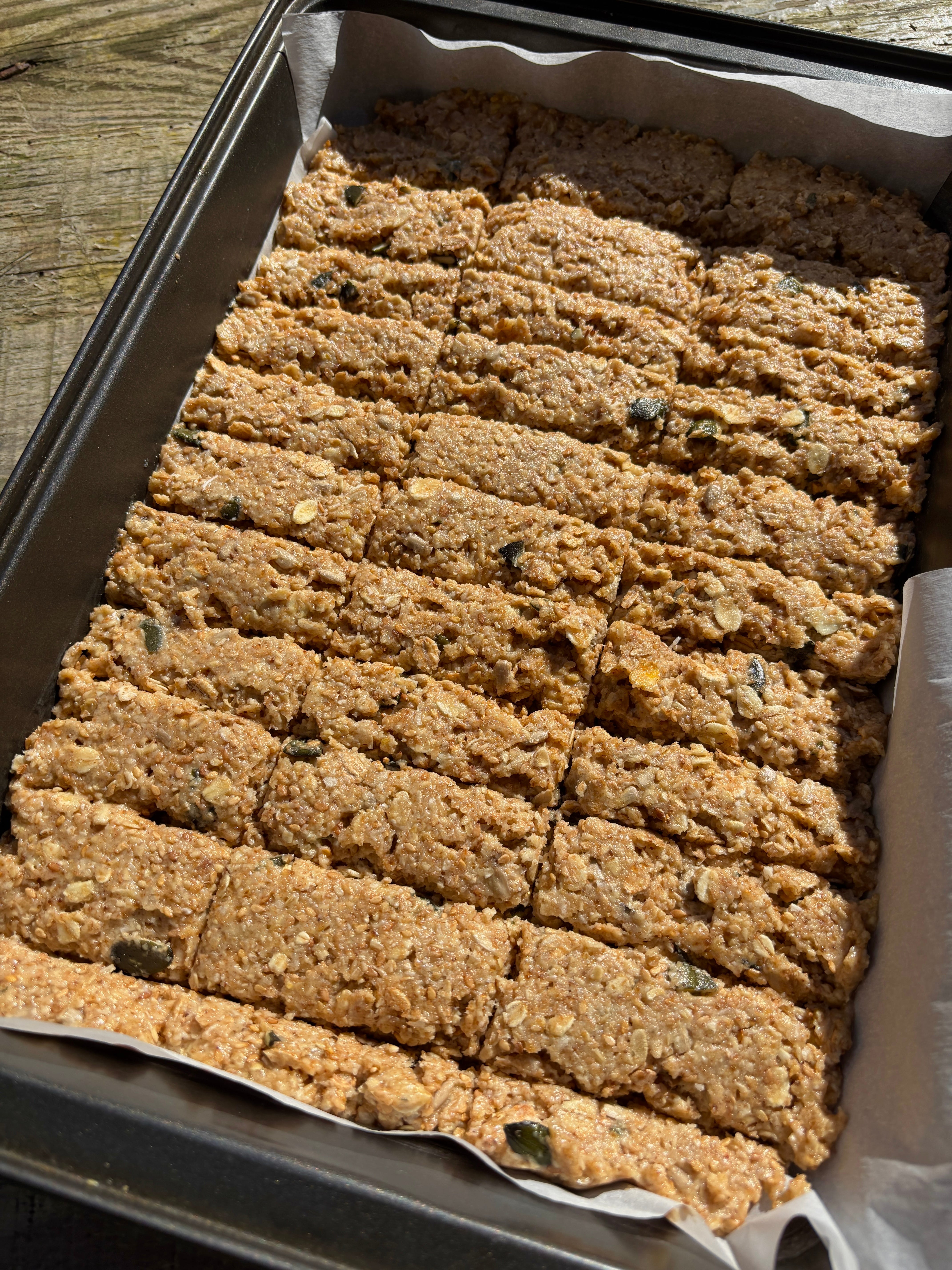
I made these rusks few times, working on getting the proportions to just where I liked them, adding more seeds to the recipe and making a few other adjustments. For the first batch, as you can see above, I didn’t leave enough overhang with the parchment paper to lift the rusks out. I am guilty of reusing parchment paper, foil, and plastic wrap whenever I can, and was using an already-trimmed sheet of parchment. So sharp-eyed readers might notice that.
Then I remembered I had a few rolls of non-stick foil that came over from the states, which, like certain other culinary-related treasures, I save for special occasions, and decided that this was one of them. It worked really well, although parchment or regular foil will do the job too. And I do have three rolls of non-stick foil, so I shouldn’t be that miserly with it.
