

Tuscany



Welcome back! After I posted part 1 of our trip to Tuscany…

…a few people pointed out that it sounded like we didn’t have any fun, which wasn’t the case. I did, however, pick up some sort of maladie, which the doctor who came to our apartment last weekend (who made a house call, on a Sunday!) said it may be allergies. There are a gazillion things (viruses, infections, etc.) going around right now, and I’ve been down for the count since we got back and too zonked to get a lot done. But after some rest, and the course of treatment I’ve been prescribed, I’m getting back in form.
We had a really good time in Tuscany, and I was happy to see an old friend and make some new ones, but traveling off-season means you’ll find more places closed, rain (yup…it rained almost every day), and the inevitable travel issues. But here are some more highlights:
We loved lunch at Podere Il Casale, which was recommended by several people. I don’t want to say it was the best meal of our trip, since we had so many different kinds of meals, but I was happily surprised by the freshness of the ingredients, and the food was really excellent. I was so happy we went.
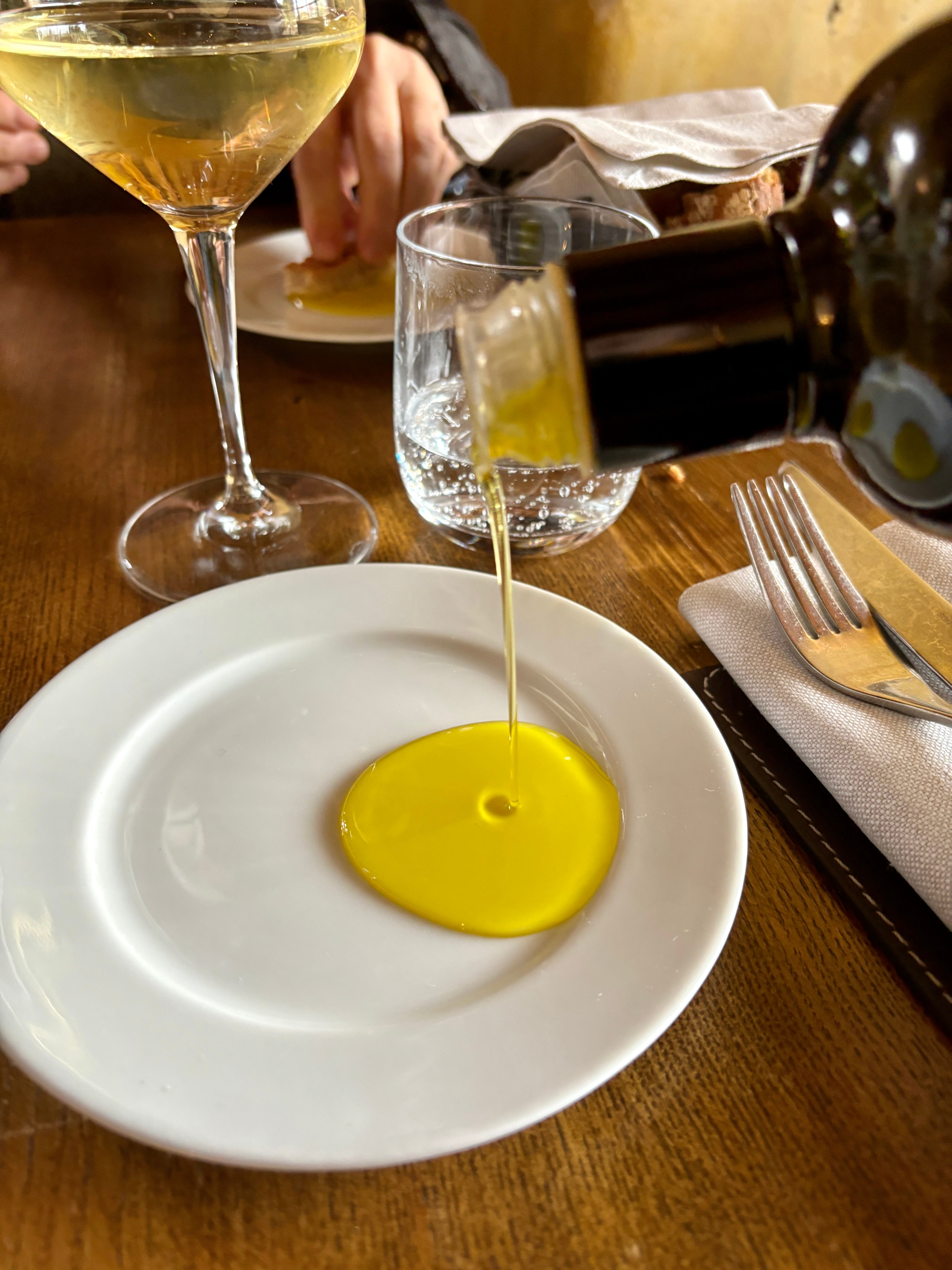
Podere Il Casale is a working farm and restaurant, along with a cooking school. The great thing about going off-season is that we didn’t have any issues getting a same-day reservation, and when we arrived at 1:30pm, just a few other tables were occupied in the charming room with a fireplace blazing away. I imagine it’s sold out in advance during high season, so be sure to book if you’re planning to visit. Like many restaurants nowadays, they have a strict cancellation policy, likely due to no-shows.
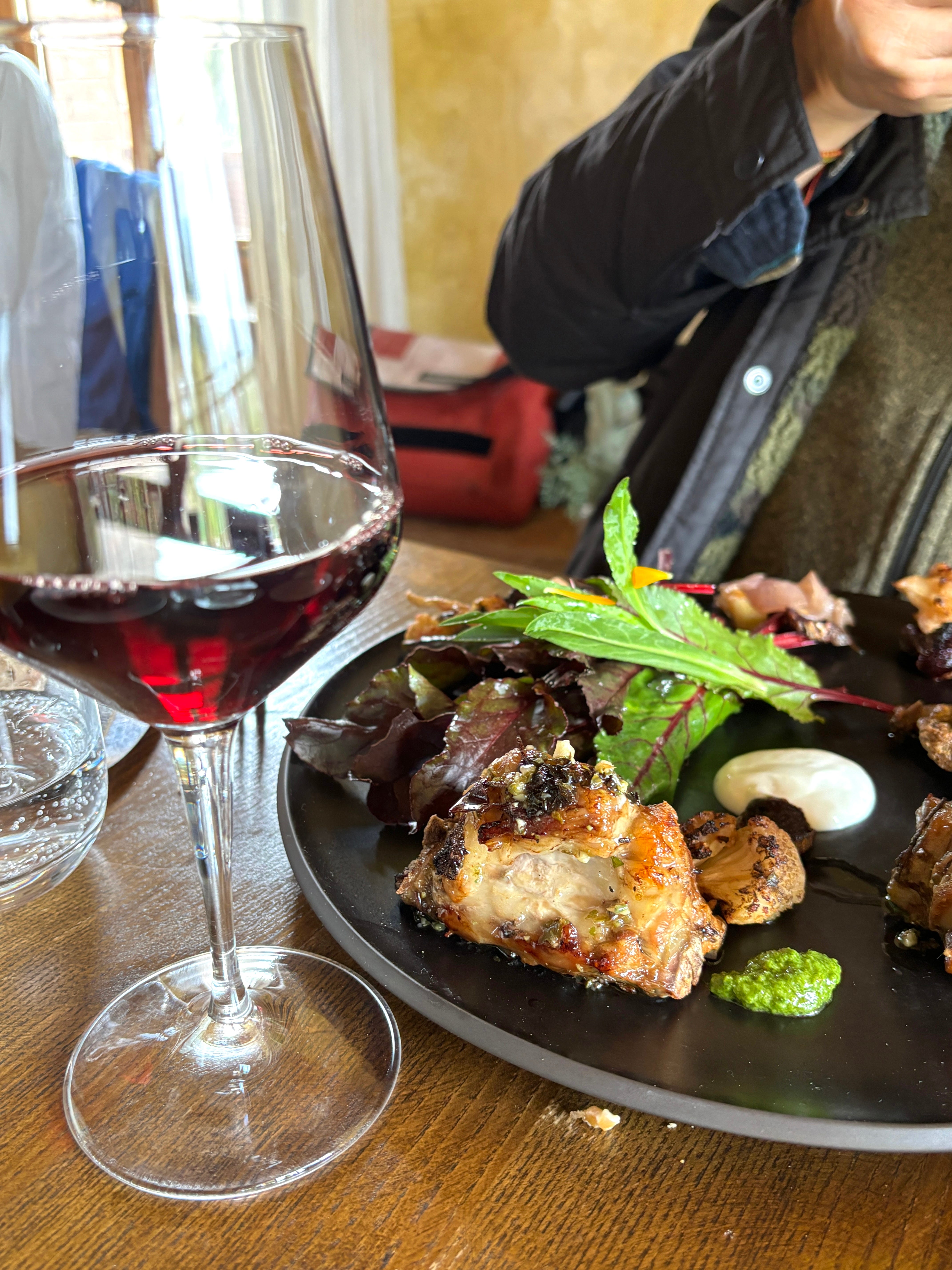
According to a NYT article about them, they were also one of the first producers of pecorino di Pienza, a dry sheep’s milk cheese. The restaurant states they make their own wine, their own cheese, their own salumi (ham, salami, etc.), use their own wheat to make pasta, cultivate their own honey and saffron, and press their own olive oil. Geez, I feel lazy now about buying all of those things! But they do them well, which is why I’m fine buying bread, wine, and cheese in Paris.
Chewy pieces of farro, shown at the top of this post, were served in a pool of fresh garlic cream, along with crispy sausage and leeks, and was one of the best things I’ve eaten in a while. (I always bring farro from Italy back with me. It’s not really something that’s appreciated outside of Italy, and I rarely see it for sale outside of the country.) A simple bowl of just-picked fresh greens from the garden was €12, the same price as the other starters. And while that may seem like a lot for “just” a salad, every leaf had its own flavor and texture, and I was certain each had been just picked that morning.
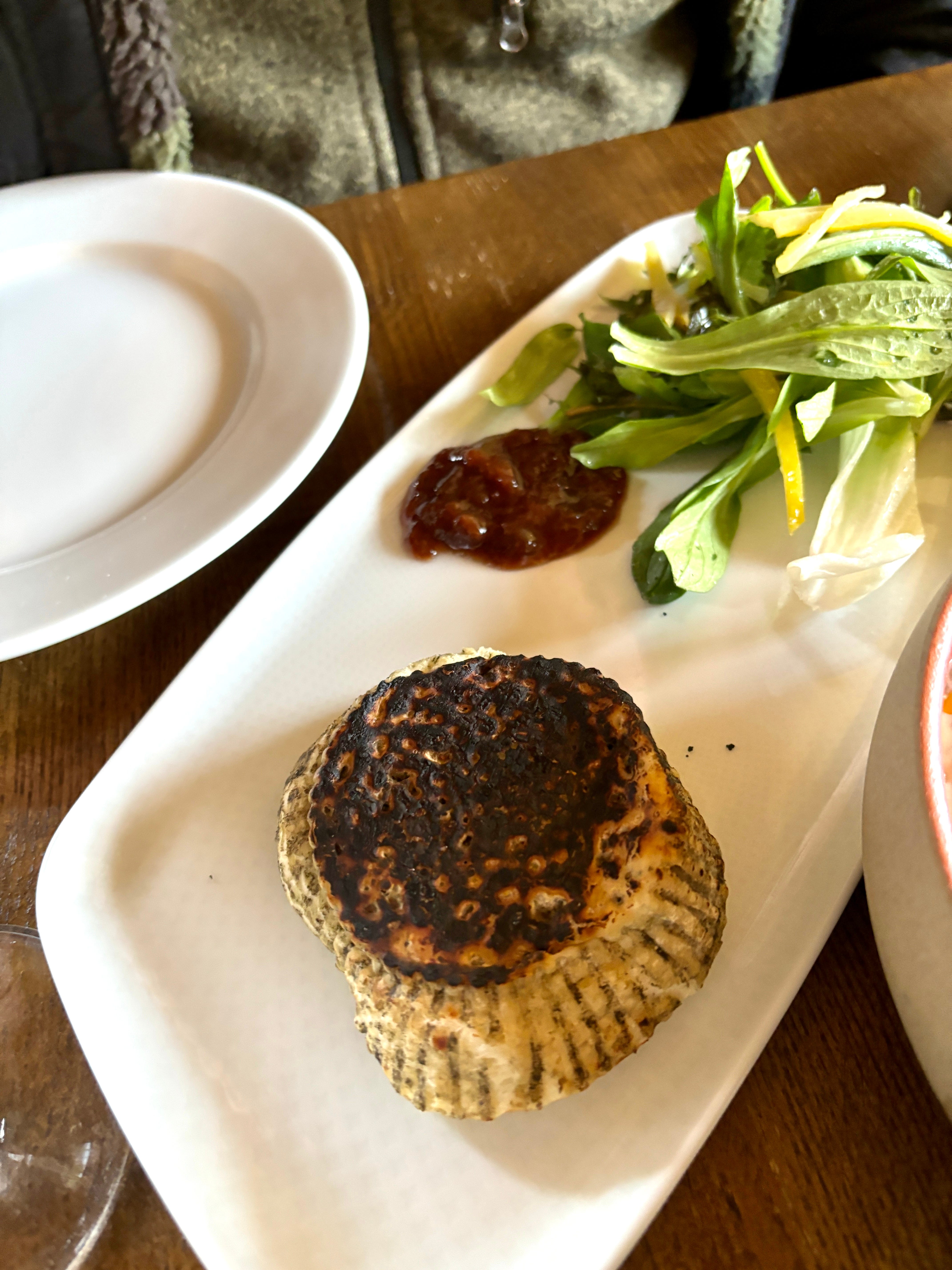
I couldn’t help ordering a third starter, a round of tomino, baked sheep’s milk cheese. The cheese arrived dark and extremely crusty on top but was creamy and warm inside. It’s not much to look at, but gosh, was it good.
Romain had an extra-large plate of agnello (lamb), and I went with the fusilloni pasta made from wheat grown on the farm, tossed in arugula pesto. The pasta itself (the quality of the fusilloni) was spectacular—and that’s coming from someone who had at least five pastas in the three days before this meal. #Tuscany. The pesto was fine, but I probably should have ordered something that wasn’t similar to something that I make at home. But I was sure to buy some of that pasta in their farm store because I can’t make pasta like that at home.
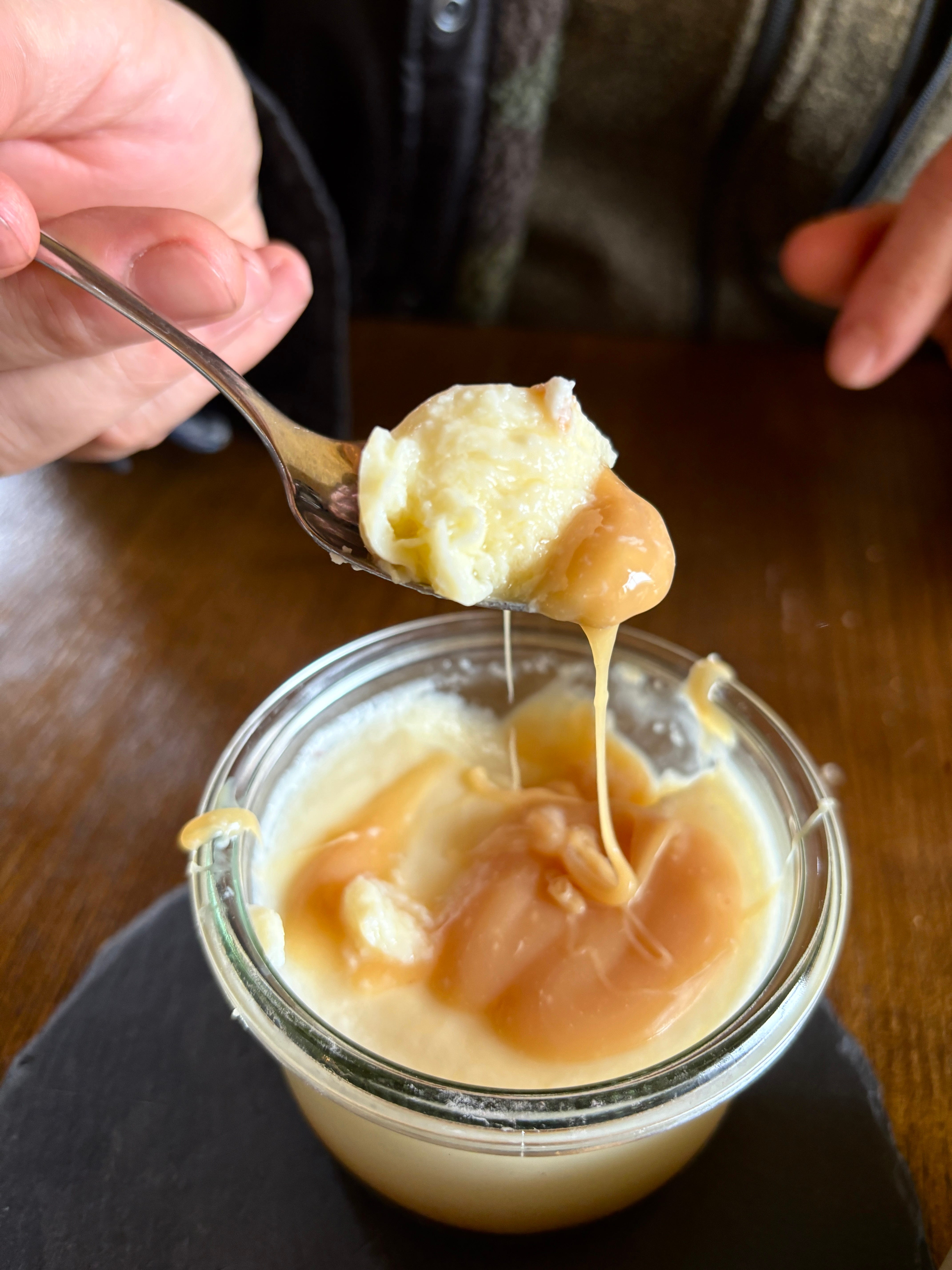
There was a deconstructed cannolo for dessert, as well as a sheep’s milk and salted butter caramel pudding (above). Both were wonderful and highlighted the high-quality dairy products of the farm.
Curiously, the farm and restaurant pride themselves on using their own ingredients. In cases where they can’t or don’t make their own products, they say, “Any ingredients that don’t come from our farm are carefully selected from other local farms we trust.” When I asked where the chocolate was from, they said, “Belgium,” which seemed a little unusual since Slitti and Amedei chocolate-makers are both in Tuscany and make very good chocolate. From the friendly server’s slightly confused look, I think I was the only person to ever bring that up.
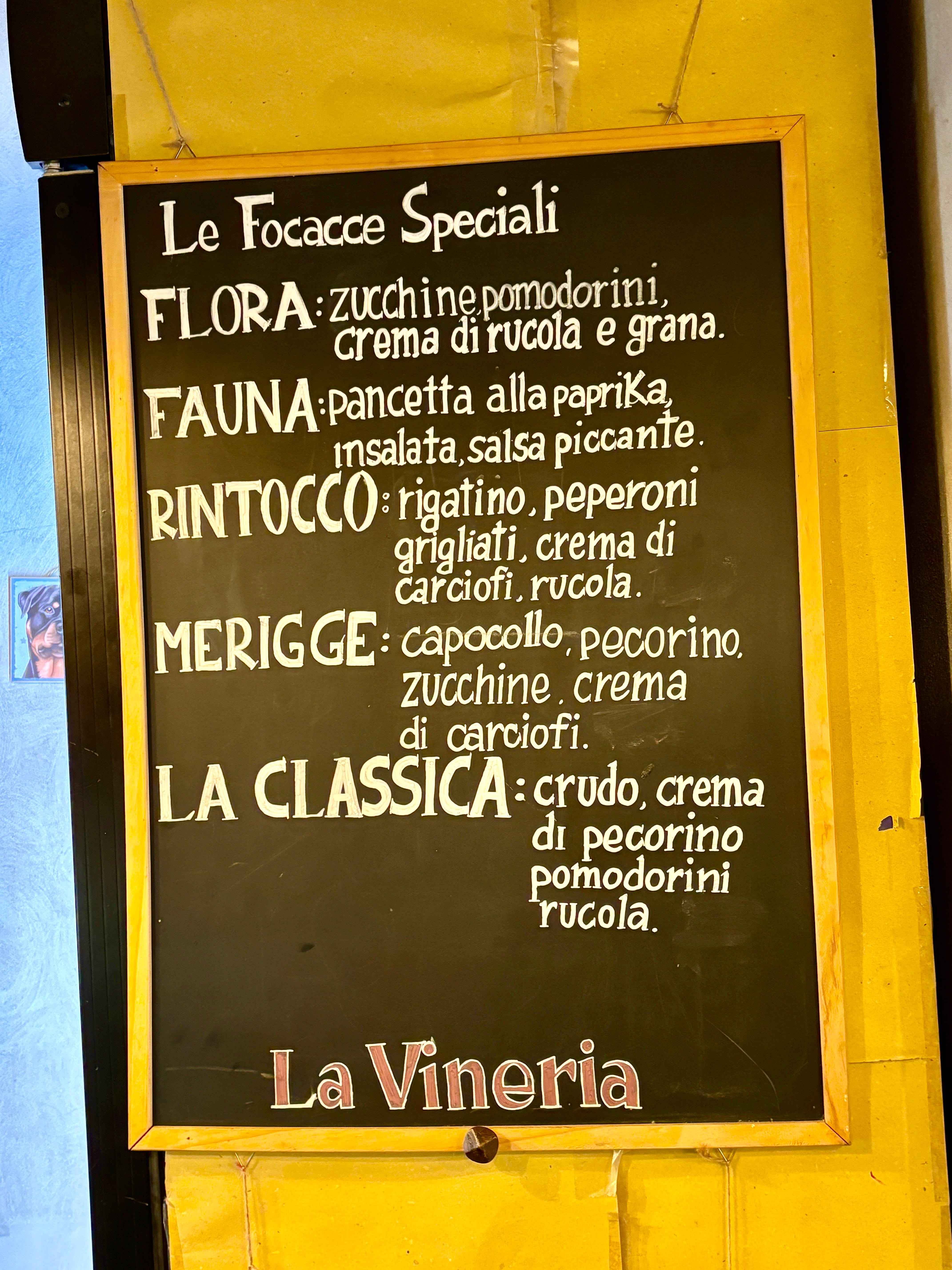
Romain had been chomping on the bit to go to Montepulciano. In fact, he mentioned it every. single. day. until we got there. And when we did, it was lunchtime and found that most restaurants in town had Chiusa (Closed) signs on the door. So we leaned on Trip Advisor, and the #1 restaurant in Montepulciano, La Vineria di Montepulciano, happened to be open and featured “snack-sized” food, which sounded good to both of us.
We had two glasses of the local red (there’s no white wine made in Montepulciano) to accompany a rather ordinary bowl of beans cooked in tomato sauce. We shared a bowl of farro and vegetable soup that wasn’t very memorable and split a focaccia sandwich. The food was okay, but I wouldn’t make a special trip across Tuscany for it, and the servers seemed like they’d be happy if they’d been able to have a Chiusa sign on the door and take a few months off.
As we walked around the hilly town, we did find Caffè Poliziano, which I LOVED. It’s a classic Italian cafe—one of those dream places that you always hope to find, with great coffee, excellent pastries (that panforte!), and Italian servers dressed in suits. We didn’t eat there, but the restaurant has a lovely view, and I’d put this caffè on my list if I was going to Montepulciano for coffee and pastries.

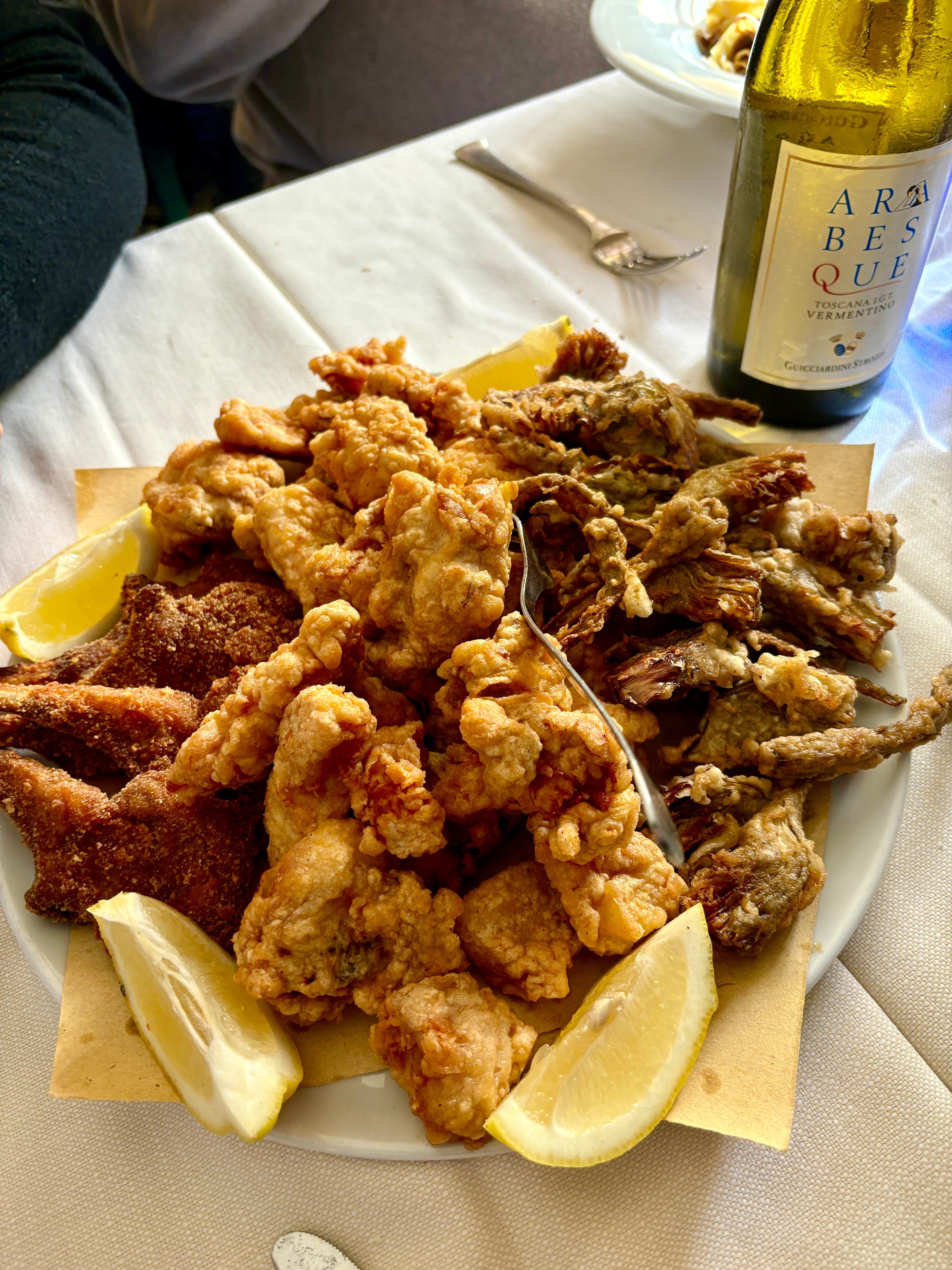
Heading into the last two days of our trip, we finally met up with my friend Judy and her husband, Andrea. I’ve known her for nearly 25 years, and we’ve kept in touch here and there. I remember visiting her when she lived in Florence, and everywhere she took me, people were hugging her and chatting with her like she was an old friend, from cab drivers to waiters. I wanted to be like her, but in French. French people don’t hug, though. We bisous.
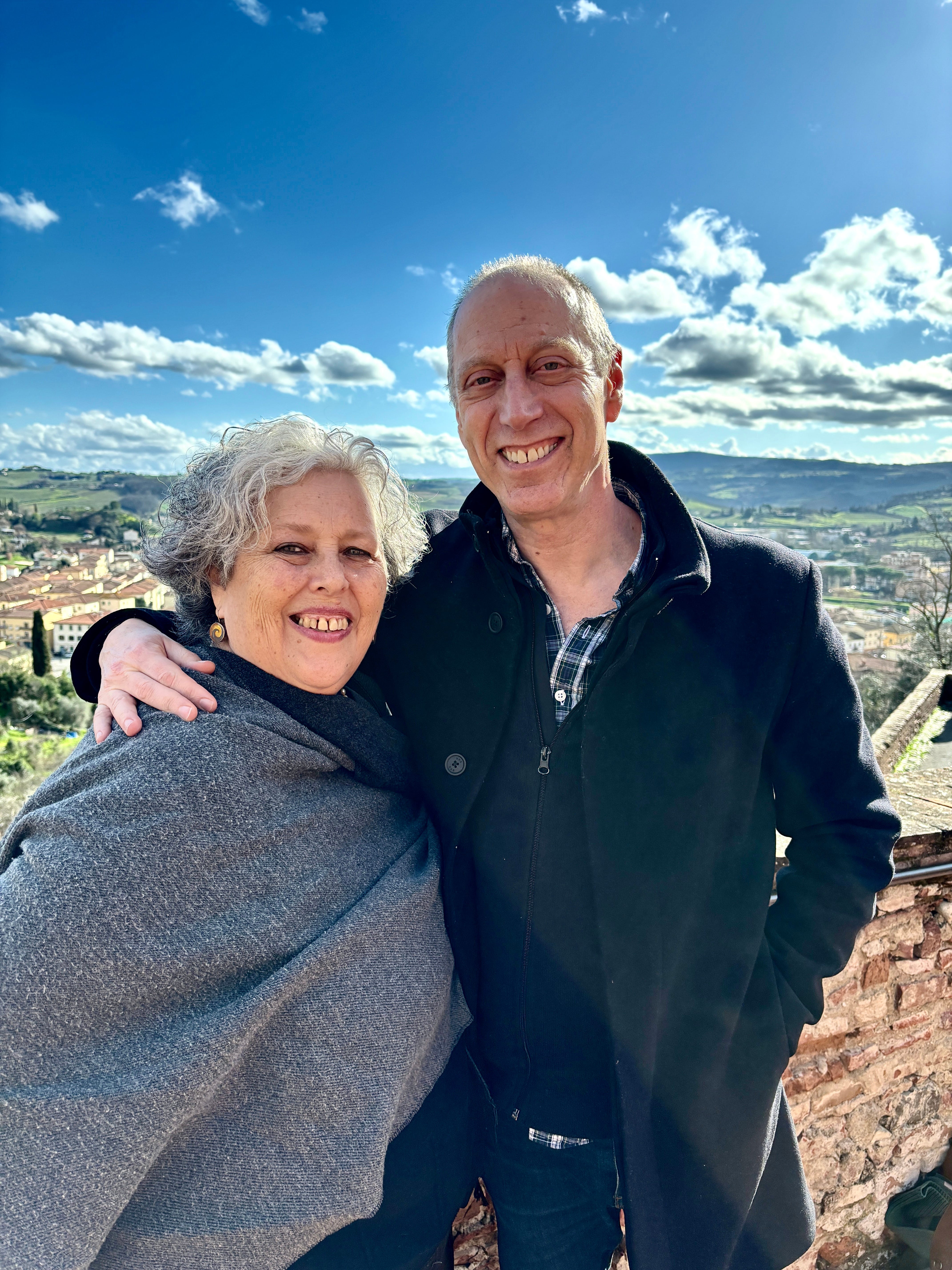
Judy arrived in Europe in 1984, determined to visit France and Italy, but with the idea that she would eventually stay and live in France. But she fell in love with Italy, and sharing a meal with her, it’s easy to see why.
Keep reading with a 7-day free trial
Subscribe to David Lebovitz Newsletter to keep reading this post and get 7 days of free access to the full post archives.